
Non-UK-Regulated Casinos: UK Rules and Risks
 Available in GB

Contents
A guide to UKGC rules, offshore licences, player status, self-exclusion, payments and protections that may not apply.
What UK Gambling Commission Regulation Covers
UK regulation is defined by the operator’s authorisation to serve the market, not by the country in which its business is based. An online casino serving customers in Great Britain falls within the UK Gambling Commission’s licensing framework and must hold the relevant Commission licence. The requirement applies whether the operator is based in Britain or elsewhere.
That distinction is central to what “UK regulated” means. A company’s registered office, the location of its servers or the country named in its branding does not, by itself, establish that its casino is regulated by the UK Gambling Commission. The relevant question is whether the operator holds the Commission’s authorisation for serving customers in Great Britain.
The phrase “licensed and regulated online casino” can therefore refer to different things in different contexts. A site may describe itself as licensed because it holds permission from a regulator outside the UK. That description does not make it UK-regulated. UKGC oversight refers specifically to the Commission’s authority over operators serving the British market; it is not a general label for any online gambling business that has obtained a licence somewhere.
This distinction also explains why the words “online casino licensed and regulated” are not sufficient to establish the type of oversight involved. The issuing authority matters. A licence from another jurisdiction and a UK Gambling Commission licence are separate authorisations, and one should not be treated as a substitute for the other. A casino’s own description of its status needs to be read in that context rather than interpreted as proof of UKGC regulation.
The practical classification is consequently based on the relationship between the operator and the British market. If an operator serves customers in Great Britain, its location abroad does not remove the UK licensing requirement. Conversely, a gambling site operating without oversight from the UK Gambling Commission is not a UK-regulated casino, even if it presents itself as licensed elsewhere. The phrase “non-UK-regulated casino” describes this absence of UKGC oversight; it does not, on its own, say which other authority, if any, has granted the operator permission.
Non-UK Registered Casinos: Licences and Risks
This is a narrower distinction than a comparison of every rule that might apply in different countries. UKGC regulation identifies the authority responsible for licensing operators serving Great Britain. It does not follow that every casino with a foreign licence is subject to the same framework, or that the terms “licensed” and “UK licensed” are interchangeable. For that reason, the regulator named in a site’s licensing statement is important to understanding what its claimed status actually means.
The territorial wording matters. The stated licensing requirement concerns operators serving customers in Great Britain, regardless of where they are established. It should not be broadened into a claim about every jurisdiction in the United Kingdom. Within the scope of Great Britain, however, an operator cannot rely on its overseas base as an alternative to the relevant UK Gambling Commission licence.
A useful way to read descriptions of casino regulation is to separate three points: which company operates the site, which authority is said to license that company, and whether the operator holds the UKGC authorisation required for service in Great Britain. These points answer different questions. In particular, a foreign licence claim addresses the operator’s stated status in another jurisdiction; it does not establish UKGC oversight.
Casino Sites: UK Payments, Licensing and Access
This framework provides a clear meaning for searches about UK-regulated online casinos and casinos regulated outside the UK. The former are operators authorised by the UK Gambling Commission to serve the relevant British market. The latter may have a different regulatory status, but the fact that a site is licensed abroad does not make it UK-regulated. The distinction rests on the identity of the licensing authority and the operator’s connection to the Great Britain market, rather than on the site’s name, presentation or place of establishment.
What Counts as a Non-UK-Regulated Casino
A non-UK-regulated casino is an online gambling site that operates without oversight from the UK Gambling Commission (UKGC). The term describes the casino’s regulatory position: it is outside the UKGC system. It does not, by itself, identify where the operator is based or establish whether another authority has licensed it.
Some such casinos hold a licence from a gambling authority in another jurisdiction. Malta, Curaçao, Gibraltar and Anjouan are among the places associated with licences for non-UK-regulated operators. These jurisdictions are not interchangeable, and the category does not imply that every site has the same licence or is subject to the same rules. A casino’s stated licensing location is a separate matter from UKGC oversight.
This distinction can be obscured by broad labels such as “international” or “offshore”. Those terms may refer to an operator’s location, its intended market or the authority named on its licence. None of them alone confirms the site’s regulatory status. In this context, “non-UK-regulated” is the more precise description: the casino does not have UKGC oversight, even if a different jurisdiction is named.
Malta
One of the jurisdictions associated with licences for non-UK-regulated operators.
Curaçao
A common licensing location for casinos operating outside the UKGC system.
Gibraltar
Another jurisdiction where non-UK-regulated operators may hold a licence.
Anjouan
A jurisdiction associated with licences for operators not overseen by the UKGC.
Likewise, a foreign licence should not be treated as another form of UKGC authorisation. The two describe different regulatory relationships. A casino may cite a licence issued elsewhere, but that claim does not make the site UK-regulated. Conversely, the label “non-UK-regulated” does not, on its own, establish that the operator has no licence at all.
The phrase “non-UK-regulated casino” therefore covers a varied group rather than a single licensing model. The relevant common feature is the absence of UKGC oversight; the named licensing jurisdiction, where one is stated, can differ. Malta, Curaçao, Gibraltar and Anjouan are examples of jurisdictions in which operators in this category are typically licensed, but their inclusion does not mean every casino associated with one of them has identical authorisation.
For clarity, the label should be read narrowly. It identifies the casino as outside the UKGC’s regulatory system, while any separate claim about licensing belongs to the jurisdiction named by the operator. Keeping those two points distinct prevents a foreign licence from being mistaken for UKGC regulation and avoids treating all non-UK-regulated sites as one uniform class.
Non-UK Licence Casinos: Regulation and Safety
Our top casino picks for the UK
- NightLuckBonus: Welcome Pack + 805% Up To 6400€ + 280 FS · Payout speed: 1-3 business days
- BeOnBetBonus: 100% up to €500 + 100 FS · Payout speed: 1-3 business days
- DieselwinBonus: Welcome Pack 250% up to £4000 + 200 FS · Payout speed: 1-3 business days
- x3betBonus: Welcome Pack 100% Up to £1.000 + 200 Free Spins · Payout speed: 1-3 business days
- BritsinoBonus: Welcome Package – Get your £2,200 + 2,000 FS · Payout speed: 1-3 business days
- SpinFormulaBonus: 550% Up To £15,000 + 550 FS · Payout speed: 1-3 business days
- ChanzeBonus: Slots Welcome Bonus #1 200% up to €500 · Payout speed: 1-3 business days
- Revery PlayBonus: 100% up to€1,000+ 100 FS · Payout speed: 1-3 business days
The Legal Position of UK Players Using Offshore Sites
The legal position of a player and the regulatory position of an operator are separate questions. Under the Gambling Act 2005, the focus is on businesses that supply gambling services into the UK market. A person placing a bet is not the target of that operator-licensing requirement. This distinction matters when considering non-UK-regulated casinos accepting customers from Britain: the operator’s obligations do not become the player’s criminal liability simply because the service is accessed from the UK.
Operators serving customers in Great Britain must hold a licence from the UK Gambling Commission, wherever the business itself is based. A licence issued by another country does not replace that requirement for an operator supplying gambling to the British market. Consequently, a foreign-licensed site that takes customers in Great Britain without UKGC authorisation is operating outside the UK licensing system. The rule concerns the operator’s activity and status, rather than creating a separate offence for the individual customer.
For players, the stated legal position is narrower. UK law does not expressly make it unlawful for a British citizen to use a gambling service licensed abroad. Likewise, gambling on a site that lacks a UK licence does not, by itself, constitute a criminal offence by the player under UK law. These points should not be confused with a declaration that every overseas service is legally authorised to serve British customers. The operator’s requirement to obtain a UKGC licence remains in place.
Under UK law, it is not expressly unlawful for a British citizen to use a gambling service licensed abroad, and doing so does not, by itself, constitute a criminal offence.
That distinction also helps explain why references to “offshore casinos for UK players” can be legally imprecise. The phrase may describe a site that is accessible to someone in Britain, but access alone does not establish that the operator is permitted to supply gambling services into the British market. The relevant licensing question is whether the business holds the UKGC authorisation required for serving customers in Great Britain, not merely whether it has a licence from another jurisdiction or accepts registrations from British users.
The same separation applies to non-GamStop casinos for UK players. Their relationship to a self-exclusion scheme does not determine whether a player has committed a criminal offence, nor does it replace the operator-licensing test. A site may be available to a British user while remaining outside UKGC regulation. The player’s lack of criminal liability under the stated rules should therefore not be read as evidence that the operator is compliant with the requirements for the British market.
The Gambling Act 2005 governs gambling in England, Wales and Scotland; Northern Ireland is outside the Act’s territorial scope. The licensing rule described for operators serving Great Britain applies regardless of where the operator is headquartered. This geographic distinction is relevant because “UK” is often used as shorthand in discussions of online gambling, while the specific operator requirement concerns customers in Great Britain. A broad statement about UK players should not obscure that difference.
VPN-Friendly Casinos in the UK: Rules and Risks
In practical legal terms, two conclusions can be held at once: an operator supplying gambling services into Great Britain needs UKGC authorisation, and an individual who gambles on an unlicensed site does not thereby commit a criminal offence under UK law. Neither conclusion cancels the other. The first concerns the business’s permission to serve the market; the second concerns the legal exposure of the person using the service. Thus, the absence of a player offence should not be treated as permission for an unlicensed operator to target British customers, while an operator’s lack of UKGC status should not be misrepresented as making the player’s conduct a criminal act.
GamStop, Self-Exclusion and Offshore Gambling Risks
GamStop is the UK Gambling Commission’s self-exclusion scheme. Casinos operating outside that system are not participants, so an exclusion registered through GamStop does not extend to them. This is an important distinction for anyone considering casinos not on GamStop: the exclusion is not a universal block on online gambling, but a restriction within the scheme’s participating network.
Self-exclusion is intended to create a barrier between a person and gambling accounts covered by the arrangement. When a site is outside GamStop, that shared barrier is absent. A person who has excluded themselves through the scheme may therefore still encounter gambling services that do not receive or act on that exclusion. The practical implication is that GamStop cannot be relied on to prevent access to every site operating beyond the UKGC system.
Self-Exclusion Gap
GamStop exclusions do not extend to casinos operating outside the UKGC system, meaning a person who has excluded themselves may still encounter and access these sites.
This applies to casinos regulated outside the UK, including Curaçao-licensed sites that are not part of GamStop. The jurisdiction named on a casino’s licence does not, by itself, make the site a participant in the UK scheme. The relevant point for self-exclusion is whether the operator belongs to GamStop, not simply where it is based or which foreign regulator is associated with it.
The gap matters because self-exclusion works best as part of a broader set of controls. UKGC-licensed operators are subject to mandatory responsible-gambling requirements. At non-UK-regulated casinos, those UK requirements do not apply in the same way, and responsible-gambling rules may be less stringent. Players also forfeit access to mandatory UK responsible-gambling tools when gambling at offshore sites. That does not establish that every such operator offers no controls at all; it means that equivalent protections cannot be assumed.
Deposit limits and self-exclusion schemes are among the safeguards that may be absent or may not operate with the reach of UKGC requirements. Any tools offered by an individual site are separate from GamStop and may not provide a network-wide restriction. A site’s own option to close or restrict an account should therefore not be treated as proof that the person has been excluded from other casinos outside GamStop.
Non-Gamban Casinos in the UK: What the Search Means
The consequences extend beyond the effectiveness of an exclusion request. Non-UK-regulated casinos may have less stringent data-protection rules than UKGC-licensed operators. That difference can affect the standards governing how personal information is handled, although it does not establish that every offshore operator misuses data. The level of protection depends on the operator and the rules applying to it, rather than on the UKGC framework.
For people who use self-exclusion because gambling is causing harm, the separation between GamStop and sites outside its network can leave a substantial gap in protection. A restriction that covers participating UKGC operators may not prevent contact with, registration at, or gambling through a non-participating site. The absence of a shared exclusion mechanism also means that the scheme cannot ensure that an exclusion is recognised across those operators.
Accordingly, the term “outside GamStop” describes more than a difference in branding. It signals that the UK scheme’s exclusion mechanism does not cover the casino, and that UK-mandated responsible-gambling tools are not assured there. Individual operators may state that they provide their own controls, but those claims do not make them part of GamStop or establish equivalent protection. The distinction is particularly relevant where self-exclusion is being used as a practical safeguard rather than as a general preference about where to gamble.
How Non-UKGC Casino Sites Differ in Practice
The practical difference between a UKGC-regulated casino and a non-UKGC-regulated casino is not limited to the licence displayed on a website. It also concerns what oversight applies when a game, account or withdrawal is disputed, and what position players occupy if an operator becomes insolvent. The details vary between jurisdictions; the framework for Anjouan-licensed operators illustrates some specific limits.
Anjouan’s rules do not require casinos to have random number generator testing, undergo audits or keep player funds separate from business funds. These omissions do not establish that every casino licensed there handles games or money improperly. They do mean that those protections are not guaranteed by the licensing framework itself. A site’s own statements about testing or account balances are not, on their own, equivalent to a regulatory requirement.
UKGC-Regulated
- Mandatory RNG testing and audits
- Mandatory separation of player funds
- Independent dispute resolution routes
Anjouan-Licensed
- No mandatory RNG testing or audits
- No guarantee of fund separation
- No independent adjudication process
Fund separation matters if an operator fails. Anjouan-licensed casinos do not guarantee that player balances are held apart from company funds. If the business collapses, players are unsecured creditors rather than holders of funds guaranteed to be ring-fenced. Any recovery would therefore depend on the circumstances of the failure and the process for dealing with creditors; the licence does not assure repayment.
Complaint handling is another distinction. Anjouan’s authority does not take up, mediate or decide individual player complaints. Its framework requires an operator to respond to a complaint within 30 calendar days, but a response deadline is not the same as independent adjudication. Anjouan-licensed casinos also lack an independent dispute-resolution route comparable to the approved alternative dispute resolution services associated with UKGC-regulated operators.
This leaves a practical gap when a player and casino disagree over a transaction, account restriction or application of terms. The operator may respond, but there is no equivalent independent Anjouan process to review the dispute and issue a decision. That does not establish that every complaint will be handled unfairly; it describes the limits of the formal routes available under this framework.
A casino not regulated by the UKGC may still display a licence from another jurisdiction, but the existence of that licence does not make its oversight equivalent to UKGC supervision. The licence’s protections depend on the rules of the issuing authority. In the Anjouan case, the absence of mandatory audits, RNG testing, segregated funds and independent dispute resolution affects different stages of a player’s relationship with the operator: game oversight, custody of balances and recourse after a dispute.
These distinctions are relevant when assessing what a licence can practically provide. A regulator’s name alone does not show that player funds are protected or that a complaint can be taken to an independent body. For Anjouan-licensed casinos, the stated framework leaves those protections unguaranteed and places complaint response primarily with the operator.
Anjouan Licensing and the Limits of Its Authorisation
An Anjouan casino licence is a jurisdiction-specific authorisation; it does not give an operator permission to serve every market. In particular, it does not authorise operation in the United Kingdom or in other restricted markets. A site displaying this licence should therefore not be treated as UK-authorised on that basis. The relevant question is whether the operator holds the authorisation required for the market in which it offers gambling, not simply whether it has a licence somewhere.
This distinction also matters when comparing Anjouan-licensed sites with Curaçao casinos outside GAMSTOP. A licence issued in one jurisdiction does not establish that a casino is part of the UK’s self-exclusion scheme, nor does it establish permission to operate in the UK. Under Anjouan’s framework, licensed casinos are not required to integrate GAMSTOP. The licence also does not require an independent alternative dispute resolution process comparable to services approved under the UK system. These are limits on what the Anjouan authorisation itself requires; they do not establish the particular arrangements of every individual site.
Attention: An Anjouan licence is a jurisdiction-specific authorisation and does not provide permission to operate in the United Kingdom.
The licence claim has to be assessed as a claim about a named operator and its current authorisation. Relevant checks include whether the operator appears in Anjouan’s public register, whether the listed authorisation remains in date, and whether the company named on the register matches the company operating the casino. A mismatch, an expired entry or the absence of a public listing would leave the claim unverified. A licence logo or statement on a casino’s own pages is not, by itself, equivalent to confirmation against the authority’s records.
Even a matching and current entry has a limited meaning: it supports the claim that the named company has an Anjouan authorisation, not that the company may offer gambling in the UK. Nor does it transform the authorisation into UK Gambling Commission oversight. The distinction is important because jurisdictional licensing and permission to serve a particular market are separate matters. An Anjouan licence cannot be used as a substitute for UK authorisation where that is required.
Accordingly, the label “Anjouan-licensed” should be read narrowly. It identifies the claimed licensing jurisdiction, while the scope of that authorisation remains bounded by its terms and by restrictions in other markets. Verifying the register details can clarify whether the claim is supported, but it does not remove the limitation on UK operation or establish participation in UK-specific schemes.
How to Check an Online Casino Licence
A licence claim should be checked against the regulator responsible for issuing it. A casino displaying a licence badge or number is making a claim; the badge alone does not establish that the operator holds a current authorisation or that it covers the service being offered.
For an operator serving customers in Great Britain, the relevant check is the UK Gambling Commission’s public register. Search for the company operating the casino and confirm that the register shows a current operating licence. The company name matters: a licence held by a different legal entity is not, by itself, evidence that the casino’s operator is authorised. A UKGC licence is distinct from a licence issued by another jurisdiction.
This is the central distinction when checking a UKGC casino licence. The presence of a foreign licence does not amount to UKGC authorisation. In particular, an Anjouan licence does not authorise operation in the United Kingdom or in other restricted markets. A site may state that it holds such a licence, but that claim should not be treated as proof of permission to serve the British market.
For an Anjouan casino licence, check the public register entry and compare its details with the casino’s own disclosures. Confirm that the listed licence has not expired and that the company named on the register matches the legal company identified by the operator. Differences in company names, spelling or corporate identity should not be dismissed as minor without evidence that the entities are the same. If a licence number or company cannot be matched to a register entry, the claim remains unverified.
A careful check therefore separates three questions: which company operates the site, which regulator—if any—has licensed that company, and whether that authorisation permits the relevant operation in the United Kingdom. A valid licence from an overseas authority answers only the question of that authority’s own authorisation. It does not replace the UKGC licence required for operators serving Great Britain.
Checking a Licence
Identify the Operator
Search for the specific company name operating the casino to ensure the licence is held by the correct legal entity.
Consult the Register
Check the regulator’s public register (such as the UKGC or Anjouan’s register) to verify the licence is current and valid.
Verify Details
Compare the company name, spelling, and corporate identity on the register with the casino’s own disclosures.
The same approach applies when a site names another regulator: consult that regulator’s own records rather than relying solely on the casino’s wording. Licence status can change, so a past listing or an undated badge is not conclusive evidence of current status. Verification establishes what a regulator’s record says; it should not be confused with a general endorsement of the casino or its terms.
Crypto and Other Payment Methods at Offshore Casinos
Payment options at a non UK regulated casino can differ from those at a UK regulated casino. Offshore operators may accept credit cards, e-wallets, bank transfers and cryptocurrencies, with transactions often handled through alternative payment processors. The available methods depend on the operator and its arrangements; the presence of a payment logo does not establish that every route will be available to every customer.
Crypto casinos are not regulated by a single authority simply because they accept cryptocurrency. Oversight depends on the operator’s licensing jurisdiction. A casino holding a foreign licence remains outside UK Gambling Commission regulation, even if it accepts familiar payment methods or presents its services in sterling. Payment technology and gambling regulation are separate matters: using cryptocurrency does not itself confer regulatory status.
The UK prohibits gambling payments funded by credit card. Cryptocurrency can provide a route that does not use a credit-card-funded transaction, and may therefore bypass that particular payment restriction. This describes how the payment method differs; it does not mean that a crypto casino is UK-regulated or that cryptocurrency changes the operator’s licensing position. Nor does the availability of a digital-asset option establish what protections apply to the gambling service.
E-wallets and bank transfers offer alternatives to cards, while some operators may use processors that are less familiar than those found at UK-licensed sites. That can make it important to identify which company receives a payment and what method is actually being used. A deposit route should not be assumed to be available for withdrawals as well: the payment options offered for each transaction may differ.
A specialist review has also reported deposits charged to a mobile phone bill or taken from a prepaid balance. This should be treated as a report about particular services, not as a standard feature of offshore casinos. Such options may change, and their mention does not establish that a given operator currently offers them.
Before using any payment method, the transaction’s terms and the operator’s identity matter. For cryptocurrency, this includes understanding which asset and transfer route are accepted and whether the stated payment destination belongs to the operator or its processor. For card, bank and e-wallet payments, the displayed method alone does not show which entity processes the transaction.
The central distinction is between a payment channel and the rules governing the casino. A cryptocurrency deposit may avoid a credit-card-funded payment route, but it does not turn an unregulated casino into a UK-regulated one. Likewise, offering bank transfers or e-wallets does not show that the operator holds a UK Gambling Commission licence. Payment methods indicate how funds may be sent; they do not, by themselves, establish who regulates the gambling service.
Main Conclusions
- Non-UK-regulated casinos operate without UKGC oversight, regardless of their foreign licensing status.
- Using offshore sites does not constitute a criminal offence for UK players, but forfeits UKGC protections.
- GamStop exclusions are not recognised by casinos operating outside the UKGC system.
- Licensing in jurisdictions like Anjouan does not guarantee fund separation or independent dispute resolution.
- Payment methods, including cryptocurrency, do not change the regulatory status of an operator.
What Is Known About Slot Machine Regulation
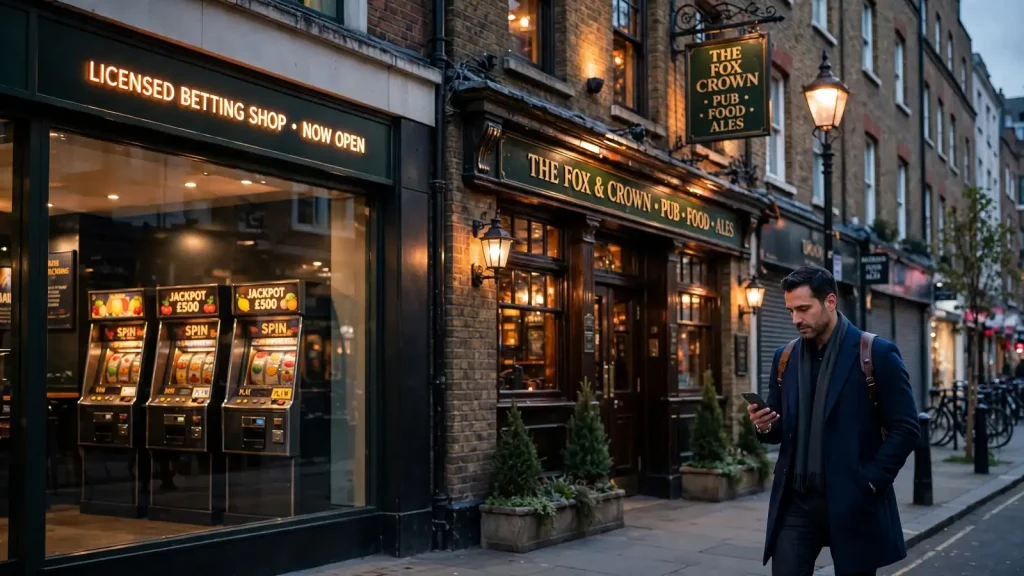
Whether slot machines are regulated depends in part on what is meant by regulation. The established licensing requirement concerns the operator: a business serving customers in Great Britain must hold a licence from the UK Gambling Commission, wherever that business is based. A game being available online does not replace that requirement or establish that its operator is authorised.
There are also specific rules for online slots in Britain. Autoplay is prohibited, and each spin must last at least two and a half seconds. These are requirements affecting how online slot play is offered. They do not, by themselves, describe a separate licence for each game or explain a complete technical testing regime for slot software.
This distinction matters when assessing claims about a particular slot. An operator’s licence addresses the operator’s authority to serve the market; it should not be treated as proof of every characteristic of an individual game. Conversely, a game title or software provider does not establish that the casino offering it holds the required UKGC licence. The two questions concern different parts of the arrangement.
The available rules therefore support a bounded answer to how slot machines are regulated: the operator must be licensed to serve customers in Great Britain, while online slot play is subject to restrictions including the ban on autoplay and the minimum spin duration. They do not, on their own, establish a detailed account of how every machine or game is tested, certified or audited. Such claims require evidence about the applicable technical standards and the specific product, rather than an inference from the operator’s licence alone.
The term “slot machine” can also refer to physical machines as well as online games. The licensing requirement stated here concerns operators serving customers in Great Britain; it should not be expanded into claims about the separate regulation of land-based machines. In short, operator authorisation and rules governing online play are identifiable parts of the framework, but they are not interchangeable with a full account of technical regulation for every slot.
Online Casino No Registration in the UK: Explained
The Limits of UKGC Protection at Offshore Casinos
A casino regulated by the UK Gambling Commission is subject to a framework that gives customers access to protections unavailable at sites operating outside it. The distinction matters most when a dispute arises or when gambling safeguards are needed: using a non-UK-regulated casino means losing access to the UK’s Financial Ombudsman Service and to responsible-gambling tools that UK rules require.
This does not mean that every offshore operator will mishandle a complaint or fail to offer any safeguards. It means that protections available through the UK system cannot be assumed to apply. A site may describe its own procedures or provide account controls, but those are not a substitute for access to UK-regulated complaint routes or mandatory tools. Their presence, scope and enforceability depend on the operator and the rules governing it.
The practical consequence is a narrower route to redress. If a dispute concerns a balance, a withdrawal or the application of site terms, the UK’s Financial Ombudsman Service is not available as a remedy for play at a non-UK-regulated casino. Nor can the UK Gambling Commission’s regulatory protections be relied upon to resolve that individual dispute. Any complaint process offered by the operator or its licensing jurisdiction is separate from UK oversight and may not provide an equivalent route.
Responsible-gambling protections also differ. Customers at these sites do not receive the mandatory tools required of UKGC-regulated operators. Site-specific controls may exist, but their availability should not be treated as evidence that the UK standard applies. This is particularly relevant where a person needs formal limits or other safeguards to manage gambling.
The central limitation is therefore institutional, not simply a question of whether a particular casino behaves well. Without UKGC regulation, UK complaint mechanisms and required safeguards do not follow the customer to the site. That leaves players dependent on the operator’s own processes and any protections provided by its licensing framework, rather than on UK systems.
Are non-UK-regulated casinos legal for UK players to use?
UK law does not explicitly prohibit British citizens from using gambling services licensed in other countries, and players do not commit a criminal offence by gambling on an unlicensed site. Operators serving customers in Great Britain are still required to hold a UK Gambling Commission licence.
What are non-UK-regulated casinos?
They are online gambling sites that operate without oversight from the UK Gambling Commission. Some hold licences from other jurisdictions, but a foreign licence is not UKGC authorisation.
What payment options are available at non-UK casinos?
They may accept credit cards, e-wallets, bank transfers and cryptocurrencies, sometimes through alternative processors. Some also allow deposits through a mobile phone bill or prepaid balance.
Related posts

Terms of Use
UK Gambling Casino Sites: Slots, Licensing and Terms