
UK Casino Sites and Credit Card Payments
 Available in GB
Contents
UK rules exclude credit-card deposits for gambling, while available alternatives and cashier options depend on the operator.
Why UK-Licensed Casinos Do Not Take Credit Cards
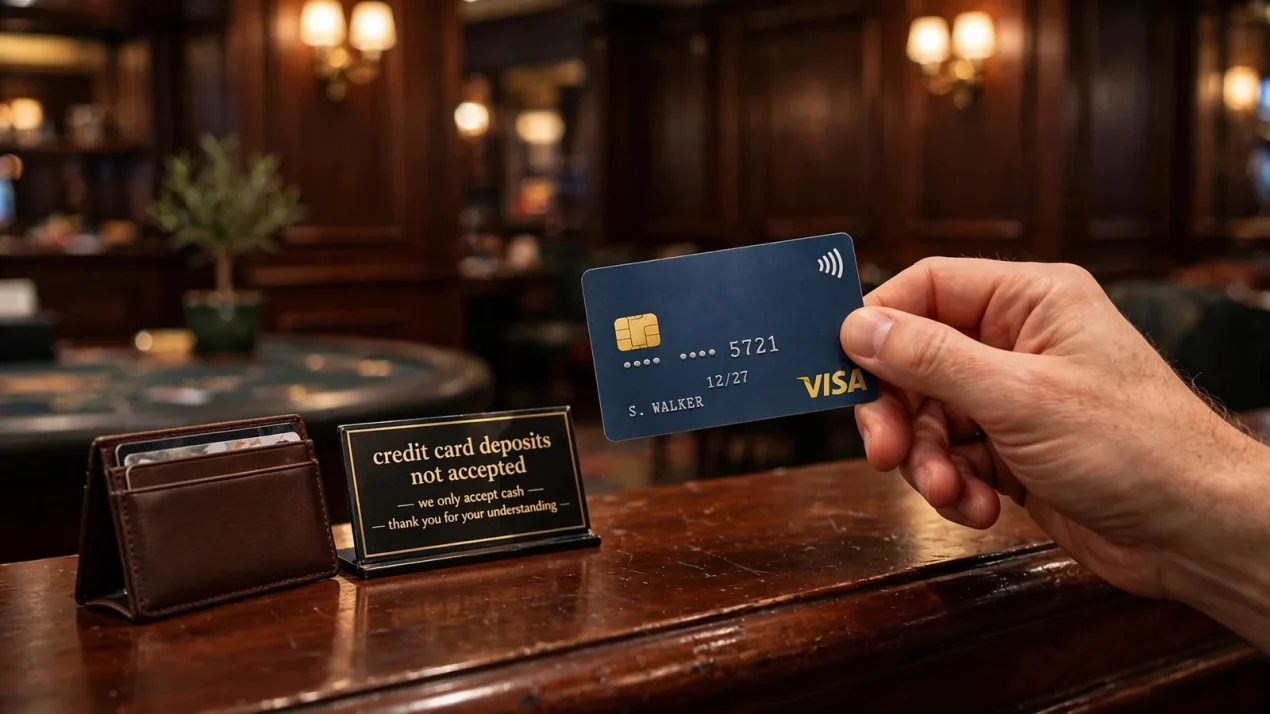
The phrase “credit card casino” can describe very different things. It may refer to a site that appears to offer card payments, a casino operating under UK rules, or a gambling site based outside the UK regulatory system. Those descriptions are not interchangeable. For customers looking at the UK-licensed market, the practical position is that credit-card deposits for gambling are not accepted.
This distinction matters because payment logos and general descriptions can be broader than the actual options available to a UK customer. A specialist review of casino payment methods may list Visa and Mastercard, for instance, but those are card networks, not a statement that every product carrying their logos can fund gambling. The card’s product type and the operator’s current cashier options matter. A credit card and a debit card can bear the same network logo while being different payment products.
Accordingly, a page describing “casino sites that accept credit cards” does not, by itself, establish that a UK-licensed casino will accept a credit-card deposit. The wording might reflect an international overview, an outdated description, or a site operating outside the UK licensing system. Without clear information about the operator’s regulatory status and the payment product in question, the phrase is not enough to establish eligibility.
What “UK casino” means in this context
In Great Britain, remote gambling operators serving customers must hold the relevant licence from the UK Gambling Commission. A site’s use of sterling, its availability to UK residents, or the presence of familiar payment brands does not establish that it is licensed in the UK. The relevant distinction is the operator’s licensing status, not simply the language or currency displayed on its pages.
Offshore casinos sit outside the UK Gambling Commission’s regulatory system. Their payment arrangements may therefore be described differently from those of UK-licensed operators. That does not make an offshore site part of the UK-licensed market, even if its website uses UK-facing language or appears in material discussing UK casino payments. Nor does a search result using the words “UK casino” prove that the operator holds a UK licence.
UK Casino Sites That Accept EcoPayz and Payz
The wording “not on Gamstop” can also appear alongside credit-card casino searches, but it does not answer the question of whether a site is UK-licensed or whether it can accept a particular payment product. A description of a site’s relationship to a self-exclusion scheme should not be treated as a substitute for checking its regulatory status. These are separate matters.
Why card labels can be misleading
Visa and Mastercard identify payment networks. They do not, on their own, identify whether a card is credit or debit, or whether a particular casino cashier will accept it for a given transaction. A payment-method list that names a network therefore cannot be read as blanket confirmation that credit cards are accepted.
Even where a site lists a card network, current UK availability and the eligible card product need to be confirmed in the cashier. Payment options can depend on the operator’s current setup and the product being used. The presence of a logo elsewhere on a site may describe a network in general rather than confirm that every card under that network is usable for gambling deposits.
This is why a list headed “best credit-card casino sites” may not answer the practical question for someone seeking a UK-licensed operator. The heading alone cannot show whether the listed sites are licensed for the British market, whether the payment information is current, or whether the card described is a credit product. A distinction between payment network and card type is essential to interpreting such claims.
The practical answer
For UK-licensed casinos, credit-card deposits are not an available gambling payment route. A site or review that appears to say otherwise should not be taken as proof that a UK-licensed operator accepts them. The apparent contradiction often comes from treating all card payments as the same, or from grouping UK-licensed sites with operators outside the UK regulatory framework.
This does not mean every reference to Visa or Mastercard is inaccurate. It means the reference must be read precisely: the network name alone does not establish credit-card eligibility. The cashier’s current payment information and the card product’s type are more relevant than a general payment logo or a broad description of a casino as “UK-friendly.”
Credit Card Ban
UK-licensed remote gambling operators are prohibited from accepting credit-card payments for gambling, including those routed through intermediaries.
The distinction also explains why search wording such as “credit card casino sites in the UK” can lead to material that does not describe the UK-licensed market. A phrase may be used loosely across markets, while the regulatory and payment position depends on the operator’s licence and the actual payment product. For the UK-licensed market, the useful conclusion is narrower and clear: a credit card should not be expected to fund gambling.
Our top casino picks for the UK
- NightLuckBonus: Welcome Pack + 805% Up To 6400€ + 280 FS · Payout speed: 1-3 business days
- BeOnBetBonus: 100% up to €500 + 100 FS · Payout speed: 1-3 business days
- DieselwinBonus: Welcome Pack 250% up to £4000 + 200 FS · Payout speed: 1-3 business days
- x3betBonus: Welcome Pack 100% Up to £1.000 + 200 Free Spins · Payout speed: 1-3 business days
- BritsinoBonus: Welcome Package – Get your £2,200 + 2,000 FS · Payout speed: 1-3 business days
- SpinFormulaBonus: 550% Up To £15,000 + 550 FS · Payout speed: 1-3 business days
- ChanzeBonus: Slots Welcome Bonus #1 200% up to €500 · Payout speed: 1-3 business days
- Revery PlayBonus: 100% up to€1,000+ 100 FS · Payout speed: 1-3 business days
Payment Methods Available Instead of Credit Cards
For customers using UK-licensed casinos, the relevant comparison is between the payment routes available for gambling deposits, not between different types of credit card. Debit cards, e-wallets and bank-based services are among the alternatives, but their availability can differ between operators. A method shown in a general payment list may not be offered for every account or transaction.
Debit cards
Debit cards are a familiar route at UK casinos. Visa and Mastercard debit cards are commonly accepted, allowing funds to be taken from a bank account rather than borrowed through a credit facility. Their presence does not establish that every card product will work: the operator’s cashier is the practical place to see which methods are enabled.
Some casinos also list Apple Pay as a deposit route. It is a separate payment option from entering card details directly, although its availability depends on the operator. The payment method displayed during account use is more informative than a general list of brands.
Casinos That Accept Wirecard in the UK
E-wallets
PayPal is an established e-wallet option, valued in specialist casino reviews for speed and convenience. Those reviews also note that a casino may exclude PayPal deposits from bonus eligibility. That condition is not a universal rule, so promotional terms need to be read alongside the payment information.
Skrill and Neteller are offered at some sites. Specialist casino reviews report that these e-wallets may also be excluded from particular promotions; this should be treated as an operator-specific condition rather than a fixed feature of either service. Skrill is also described in specialist reviews as a common deposit method at UK-facing casinos, but presence and terms still vary by site.
Payz is the current name of the service formerly called EcoPayz, following its rebrand in 2022. Jeton is reported in specialist reviews as remaining available at a limited number of UK online casinos in 2026. Neither name indicates universal acceptance. A casino’s current cashier is needed to establish whether the service is offered there.
Bank-based payments
Open banking services and bank transfers provide another route. Specialist casino reviews report that these methods can support instant deposits and fast withdrawals at many sites. Open banking authorises a payment through a bank-connected service, while a bank transfer moves funds directly between accounts. The exact option shown depends on the operator and the customer’s bank.
These methods are distinct from card payments, even where a bank account is involved. They may suit customers who prefer a direct bank route, but descriptions such as “instant” or “fast” should not be treated as a guarantee for every transaction.
Debit Cards
Commonly accepted Visa and Mastercard debit cards that draw funds directly from a bank account.
E-wallets
Digital options like PayPal, Skrill, Neteller, Payz, and Jeton, though bonus eligibility may vary.
Bank-based Payments
Direct routes including bank transfers and open banking services for instant deposits and withdrawals.
Prepaid vouchers and other options
Paysafecard is a prepaid voucher used for deposits only. It therefore differs from payment routes that can be used on both sides of an account’s payment activity; its deposit-only status should be clear before it is considered.
Some casinos also list other e-wallets, including Jeton, or additional payment services. A list of possible routes is not a promise that each will be available at a particular casino. The main distinction is the kind of service: a debit card draws on a bank account, an e-wallet holds or routes funds digitally, and a bank-based method connects payment to a bank account. These alternatives describe how deposits may be made, rather than identifying any UK-licensed casino as a credit-card casino.
How Deposits and Withdrawals Work
A deposit and a withdrawal are separate stages of a casino transaction. A deposit moves funds from an eligible payment source into a gambling account; a withdrawal moves an available balance back out. The two stages can differ in speed and handling, so a successful deposit does not establish how quickly a later payout will arrive.
At a UK-licensed casino, the cashier records the payment route used for a deposit. Once the payment has been accepted, the funds may appear in the account balance and become available for gambling, subject to the operator’s terms and any checks. A declined or pending payment has not completed this movement, even if the banking app shows an authorisation or temporary hold.
Citadel at UK Casinos: How to Check Availability
The position is different for credit cards. UK-licensed remote gambling operators cannot accept credit-card payments for gambling, so a credit card is not a valid deposit route at these casinos. Searches for an online casino with a credit-card deposit may return material about other jurisdictions or sites outside the UK regulatory system; that does not describe the payment process at a UK-licensed operator. The relevant transaction flow begins with an eligible alternative payment source.
What happens when a withdrawal is requested
A withdrawal request is not simply the reverse of a deposit. The casino first handles the request under its own procedures, which can include reviewing the account and confirming that the funds can be paid out. KYC checks may be relevant, particularly if verification has not been completed. A specialist casino review describes first withdrawals as potentially taking longer where verification is still underway; this is a reported possibility, not a fixed timetable for every account.
After the operator approves a payout, the funds must still be delivered through the payment system. A specialist casino review notes that a card deposit may be credited instantly while a payout can take several business days. That contrast illustrates why deposit speed should not be treated as a forecast of withdrawal speed. The casino’s approval stage and the payment provider’s handling are distinct parts of the process.
UK anti-money-laundering rules generally require payouts to return to the original payment source. This is part of the closed-loop approach: funds are routed back through the method used to put them into the account, rather than freely redirected to an unrelated destination. The return route may not look identical from the customer’s perspective in every case, but the source of the original deposit remains relevant to payout handling.
Closed-Loop Policy
UK anti-money-laundering rules generally require payouts to be returned to the original payment source used for the deposit.
If the original route cannot receive a withdrawal, the casino may need to arrange an alternative and carry out further checks. Returning funds to the deposit source is also a common anti-fraud control. A different destination can therefore mean extra verification or administrative steps, rather than an immediate transfer to any account selected for convenience.
The distinction matters when interpreting claims about a casino’s payment speed. A deposit confirmation concerns money entering the gambling balance; a withdrawal estimate concerns a request that may require operator approval and payment-system delivery. Neither stage alone guarantees the timing of the other. The process is shaped by the payment source, the status of the account and the operator’s review, while the original-source requirement constrains where a payout can be sent.
Can Credit Cards Be Used for Online Gambling in the UK?
No. A UK-licensed remote gambling operator cannot accept credit-card payments for gambling. That applies whether the transaction is made directly with a card or arranged through another payment route. A credit card therefore cannot be used to deposit at a UK-licensed online casino or to fund online gambling through a UK-licensed operator.
The restriction is not limited to a card number entered on a casino’s cashier page. It also covers credit-card funding routed through a money service business. Using an intermediary does not make the underlying source of the gambling funds acceptable. The relevant distinction is whether credit is being used to finance gambling, not simply which company processes the transaction.
The same principle applies to digital wallets. A wallet cannot be used for gambling payments where it allows credit-card funds to be used for that purpose. A wallet balance is not automatically an acceptable source merely because the casino does not receive a card payment directly. Where the balance is funded by a credit card, the route remains subject to the restriction.
Casinos That Accept Upaycard in the UK: What to Check
This can make the wording on payment pages easy to misread. A payment brand or card network may be familiar, but its presence in a general list of payment methods does not establish that every card product is eligible for gambling transactions in the UK. Credit cards and debit cards are different products, even when they carry the same network branding. The relevant question is not simply whether a cashier displays a card logo; it is whether the transaction would use credit to fund gambling.
The rule concerns payments accepted by remote gambling licensees serving the British market. It is not a statement that credit cards cannot be used for any online purchase, nor does it prevent their use for ordinary spending unrelated to gambling. Its scope is credit-card payments for gambling, including indirect routes that preserve the credit-card funding source.
The restriction also applies across forms of remote gambling rather than only to a particular casino game. A deposit intended for casino play remains a gambling payment whether it is later used for table games, other casino games or slots. Changing the intended game does not change the payment’s character. Nor does splitting a payment across routes alter the basic issue if credit-card funds are still being channelled into gambling.
For a customer, the practical outcome is that a rejected credit-card transaction should not be treated as a technical obstacle to work around by transferring the same funds through a wallet or intermediary. The rule constrains the payment route itself, not just the appearance of the final transaction at the casino. A route that conceals the card’s role would not turn credit-card-funded gambling into an allowed payment.
Do
- Use a debit card for deposits
- Use a verified e-wallet
- Ensure the payment source matches the account holder
Don’t
- Use a credit card directly
- Route credit funds through a money service business
- Fund a digital wallet with a credit card for gambling
The Gambling Commission’s restriction on credit-card gambling remains in force. UK-licensed remote gambling operators must not accept those payments, whether presented directly or routed through a money service business. This gives a clear answer to whether a credit card can be used at a UK online casino: it cannot be used to fund gambling with a UK-licensed operator.
Checking Payment Compatibility and Account Ownership
A payment method displayed on a casino’s information page does not establish that it will be available for every customer or transaction. The cashier is the relevant place to confirm which options can be used on a particular account. Availability can depend on the account and the payment route, so a method described generally by a site may not appear as an option when a deposit is attempted.
This distinction matters when assessing claims about online casinos that accept credit cards in the UK. A card brand appearing in a cashier does not mean that every card product bearing that brand is eligible for gambling payments. UK-licensed remote gambling operators cannot accept credit-card payments for gambling; routing credit-card funds through a money service business does not make the transaction acceptable. Nor can an operator accept a wallet payment when that wallet allows credit-card funds to be used for gambling. A payment method’s name alone therefore cannot establish that a particular funding source is permitted.
Account ownership is a separate compatibility issue. Using account details and a payment route belonging to the same customer reduces the chance that basic ownership discrepancies will delay or complicate a transaction. A consistent route—one named account used for both deposits and withdrawals—is often the clearest arrangement, although it does not remove the operator’s verification requirements.
Casinos That Accept E-Checks in the UK: Evidence
Closed-loop rules help explain why this consistency matters. Returning funds to the original payment source is a common anti-fraud and anti-money-laundering control. If that source cannot receive a payout, or if an alternative route is needed, additional verification may be required. The presence of another payment option does not, by itself, establish that it can be used for a withdrawal or that the operator will accept it without further checks.
The same caution applies to searches for non-GamStop casinos that accept credit cards. A site’s relationship with GamStop does not establish that it is licensed by the UK Gambling Commission, and a payment claim does not establish that it is lawful to serve customers in Great Britain. Remote gambling licensees selling into the British market must hold the relevant UK licence. Credit-card restrictions for licensed operators cannot be treated as a question of which card logo is displayed or whether a site appears in a particular self-exclusion scheme.
Before a transaction, the key checks are whether the cashier offers the intended route for that account, whether the payment instrument belongs to the account holder, and whether the same source can be used for a payout. Where details do not match or a different withdrawal route is proposed, the operator may ask for further evidence of ownership. These checks concern payment compatibility and account security; they do not turn an otherwise prohibited credit-card gambling payment into an acceptable one.
Payment Compatibility Check
- Confirm the cashier offers the intended payment route
- Verify the payment instrument belongs to the account holder
- Ensure the source can be used for a future payout
When the Credit-Card Gambling Ban Took Effect
The UK credit-card gambling ban took effect on 14 April 2020. The date marks the start of the restriction introduced by the gambling regulator; it was not a temporary measure with a stated end point. The rule remains in force, so the position in 2026 is unchanged: credit-card payments cannot be used for gambling with UK-licensed remote gambling operators.
The date matters because older references to casino payment options may describe a different regulatory position. Material written before the ban took effect cannot establish what a UK-licensed casino may accept now. Likewise, the continued appearance of credit cards in general descriptions of casino payments does not show that they are permitted for gambling under the current rule. The relevant point is the regulatory status of the payment, not whether a card brand or payment facility exists elsewhere.
The ban is sometimes discussed as though it were a casino-specific policy. Its timing is better understood as a regulator-imposed restriction on credit-card gambling, rather than a choice that individual UK licensees can reverse. An operator serving the British market under the relevant Gambling Commission licence must follow the rule. A casino’s payment page or terms cannot make a prohibited credit-card gambling payment permissible.
The date also distinguishes the introduction of the ban from later changes in how a casino presents its cashier or account controls. A change to a website, a new payment option, or an updated set of terms does not by itself indicate that the regulator has relaxed the restriction. The established status is that the ban began on 14 April 2020 and remains in force; no subsequent relaxation has changed that position.
The question of why credit cards were banned should be separated from the question of when. The effective date and continuing status are clear, but they do not, on their own, establish the regulator’s full policy reasoning. It would therefore be misleading to infer a specific motive from the date alone or to present a general explanation as the regulator’s stated rationale. The sound conclusion is narrower: the regulator introduced the restriction, and UK-licensed remote gambling operators remain subject to it.
For someone checking historical information, the practical test is whether the material reflects the rules in force after 14 April 2020. Pre-ban descriptions may explain why older pages mention credit-card deposits, but they do not describe current acceptance at licensed casinos. Conversely, the continued force of the ban does not depend on a casino repeating the original announcement: it is the applicable regulatory position, not a temporary notice attached to an individual payment method.
Accordingly, the timeline has two parts: the restriction took effect on 14 April 2020, and it has not since been relaxed. That is the relevant historical context for the UK casino credit-card ban.
Deposit Amounts and Payment Limits
Minimum-deposit figures describe the smallest amount accepted for a particular transaction; they do not establish which payment methods are eligible. A specialist casino review places the starting deposit in the £10–£20 range, with the threshold depending on the payment method selected. The figure should therefore be treated as a reported guide, not a fixed minimum across UK casinos or across every option in a cashier.
Deposit Limits Overview
Minimum deposits typically range from £10–£20 depending on the method. Maximums may be applied per transaction, per day, or per month, varying by operator and account status.
Payment screens may show different entry thresholds for different routes. The amount accepted can also depend on the operator’s terms for that method. A displayed minimum is not evidence that a payment route is available to every account, nor does it change the rules governing credit-card payments for gambling.
Maximums are less uniform. A specialist casino review reports that deposit caps can apply per transaction, per day or per month, and that the relevant maximum varies with both the payment method and the customer’s account status. These are distinct measures: a per-transaction cap concerns a single payment, while daily and monthly caps aggregate activity over those periods. The applicable figure is therefore determined by the specific cashier and account, rather than by a universal UK-wide limit.
Account status may affect the maximum an operator permits, so figures published for one payment route or account cannot safely be assumed to apply to another. The cashier’s stated terms are the relevant reference for the transaction being considered. If a displayed amount differs from a general figure in a review, the operator’s current payment information takes precedence.
Deposit thresholds and caps should also be kept separate from account-level financial controls. They describe what a payment route or operator will process; they do not, by themselves, indicate that a deposit is suitable or that a customer’s account is eligible for a particular method. For credit-card searches specifically, a minimum or maximum deposit figure does not imply that a credit-card deposit is available at a UK-licensed casino.
Credit Cards, Account Controls and Eligibility
Credit cards are not an eligible way to fund gambling at UK-licensed online casinos. The restriction remains in force, so a credit-card option should not be expected in a licensed casino’s deposit facilities. Account controls do not create an exception: setting a financial limit does not make a prohibited payment method permissible.
Financial limits are a separate part of the account-funding process. UK Gambling Commission rules require remote gambling licensees to prompt new customers to set a financial limit before their first deposit. They must also make account-level limit controls accessible, allowing customers to manage the limit applied to their gambling account. These requirements apply around deposits generally; they do not change which payment methods may be used.
The distinction matters because payment eligibility and spending controls address different issues. A financial limit governs the amount a customer can fund or spend within the operator’s account controls. The credit-card restriction governs the source of gambling funds. Meeting one requirement does not satisfy or override the other.
Eligibility to hold an account is also distinct from payment acceptance. Online gambling is legal in the UK for people aged 18 and over when the operator holds the relevant UK Gambling Commission licence. Operators must verify a customer’s age before allowing a deposit. Even when those account conditions are met, credit-card payments for gambling remain unavailable at UK-licensed casinos.
Accordingly, the practical answer to whether credit cards are allowed at UK online casinos is no. The required financial-limit prompt is not a workaround and should not be read as permission to deposit by credit card. It is an account-level control that applies before funding begins, while the payment restriction independently rules out credit cards for gambling deposits.
Credit Card Eligibility
Credit cards cannot be used to fund gambling at UK-licensed casinos, regardless of account financial limits.
Payment Costs and Currency Conversion
The cost of a casino transaction is not necessarily limited to a charge displayed beside the payment option. A specialist payment review identifies several possible components: a fee charged by the casino, a payment-provider charge, a fee from the card issuer or bank, currency conversion, and network costs. Which, if any, apply depends on the particular transaction and the parties processing it.
Currency conversion can make a visible flat fee a poor guide to the total cost. If a payment is converted between currencies, the exchange rate may include a spread: the rate applied to the transaction differs from the reference rate. A specialist review notes that this difference can outweigh a separately stated fee. The amount shown at the point of payment may therefore not reveal the whole cost unless the exchange rate and any conversion charge are also clear.
The account currency matters as well. If it differs from the currency used by the payment source, conversion may occur during the transaction. Checking the account’s selected currency and the provider’s conversion terms helps establish whether the displayed amount is the amount that will leave the bank account. A casino listing a payment method does not, by itself, establish that the same currency or fee conditions apply to every customer.
There is no payment method that can be identified as universally cheapest. A specialist payment review recommends comparing casino charges, provider fees, any currency spread and network costs against the actual transaction amount. A method with no obvious flat charge may still involve conversion costs, while another with a stated fee may have different costs elsewhere in the payment chain. The relevant comparison is the total amount paid for the transaction, not one fee in isolation.
These cost checks concern the payment route actually offered and its terms. They do not establish that a particular payment product is eligible for gambling deposits; availability and eligibility are separate questions.
Credit Cards and Online Slot Play
The restriction on credit-card payments for gambling applies to online slots just as it applies to other forms of gambling. Choosing a slot game rather than a table game does not make a credit-card deposit acceptable at a UK-licensed casino. The relevant issue is the source of the funds, not the type of game played with them.
This means that a credit card cannot be used to fund an account for online slot play at a UK-licensed remote gambling operator. Nor can the restriction be bypassed by routing credit-card funds through a money service business. Wallet payments are also not permitted where the wallet allows credit-card funds to be used for gambling. A different payment route does not change the underlying purpose of the transaction.
The rule has applied since 14 April 2020 and remains in force. Accordingly, there is no category of UK-licensed online slot play for which credit-card gambling deposits are exempt. A card branded by a payment network should not be assumed to be eligible merely because that network also processes other card products; credit and debit cards are distinct products, and credit-card funds remain restricted for gambling.
The practical answer to whether slots can be played with a credit card in the UK is therefore no at UK-licensed sites. This does not mean that online slots themselves are prohibited: the restriction concerns credit-card payments for gambling, rather than the game format. Deposits for slots must use a permitted funding route, subject to the operator’s own payment arrangements and applicable account checks.
The distinction matters because a payment may pass through an intermediary without changing where its funds originated. Where a wallet can draw on a credit card for gambling, using that wallet does not turn the payment into an eligible deposit. The restriction is about preventing credit-card funds from financing gambling, including slot play, rather than limiting only direct card transactions.
Why must withdrawals return to the deposit method?
Returning funds to the original payment source is a common anti-fraud and anti-money-laundering control. Using the same account for deposits and withdrawals can also reduce avoidable ownership checks.
What is the fastest withdrawal method for UK casinos?
PayPal, open banking services and debit cards linked to fast payout systems are generally among the quickest options. The casino’s approval process and your verification status also affect how quickly funds arrive.
Which payment methods are accepted in Great Britain?
UK casinos commonly accept Visa and Mastercard debit cards, and some offer PayPal, open banking, bank transfers, Apple Pay, Skrill or Neteller. Available options vary by casino, so check its cashier; Paysafecard is for deposits only.
Are Visa and Mastercard deposits definitely debit cards?
No. Visa and Mastercard are card networks, so their logos alone do not show whether a card is debit or credit; check the card product and the casino cashier.
Is Skrill available?
Yes, Skrill is available at some UK-friendly casino sites and remains a common deposit method. It may be excluded from promotions.
Related posts

Terms of Use
UK Gambling Casino Sites: Slots, Licensing and Terms