
Crazy Time Live Casino Game Show in the UK
 Available in GB
Contents
An overview of casino access, safeguards and evidence limits, including how Crazy Time’s game-show format differs from demo play and free play.
What the UK Casino Context Establishes About Playing Crazy Time
A casino offering Crazy Time to customers in Great Britain is subject to the same licensing framework as other remote gambling businesses. The UK Gambling Commission oversees gambling activity in the United Kingdom, including online casinos. In Great Britain, it is the sole regulator for commercial gambling, and its remit over remote gambling does not depend on where an operator keeps the equipment used to provide its service.
That distinction matters when a casino’s company or technical infrastructure is based outside the country. Location alone does not remove the licensing requirement: remote operators serving consumers in Great Britain must hold the relevant Gambling Commission licence. The obligation attaches to the service being offered to those consumers, not simply to the physical address of the business or its servers.
For someone considering a casino that lists Crazy Time, the relevant question is therefore whether the operator serving the account is licensed for the activity it provides. A game’s name on a website is not evidence of the operator’s regulatory status. Nor is a familiar brand, polished presentation or statement on a casino’s own pages a substitute for checking the regulator’s public record.
Checking an operator’s status
The Gambling Commission grants operating licences to businesses and personal licences to certain individuals involved in operating gambling in Great Britain. For a customer assessing an online casino, the business’s operating licence is the central point to verify. The Commission’s public register can be used to check the licence number before a deposit is made.
The check should connect the licence to the operator behind the casino, rather than stop at a logo or general claim of regulation. A brand name and the legal business name may differ, so the relationship between the site and the licensed business needs to be clear. If the site gives a licence number, that number can be compared with the register; if its identity or claimed authorisation cannot be reconciled with the record, the claim should not be treated as confirmed.
French Roulette Online Casinos in the UK: Rules
This process is relevant whether the site is described as a Crazy Time casino, a live casino, or a broader online casino. The game category does not replace the operator-level test. A casino may promote an individual title, but the regulatory question concerns the business providing gambling to the customer.
The licence requirement applies to remote operators serving Great Britain consumers even when key equipment is located elsewhere. Accordingly, a foreign address does not by itself show that a service is outside the Commission’s jurisdiction, just as an address in Britain would not, by itself, establish that the operator holds the required licence. The register is the appropriate place to confirm the licensing status rather than infer it from location.
What the licence check establishes
A current operating licence indicates that the business is authorised within the Commission’s regulatory system for the activities covered by that licence. It does not, on its own, establish every practical detail a customer might want to know about a particular game, nor does it certify that every statement in a casino’s marketing is accurate. The check is narrower: it addresses whether the operator has the relevant authorisation to provide remote gambling to consumers in Great Britain.
That distinction helps keep the assessment precise. Searches for Crazy Time casinos in the UK may lead to sites presenting themselves as suitable places to play, but the decisive regulatory consideration is not the wording of that presentation. It is whether the business responsible for the gambling service can be identified and its relevant licence confirmed through the Commission.
The broader legal framework also makes licensing a condition of lawful online gambling provision in the UK. For Great Britain, operators selling remote gambling to consumers must be licensed by the UK Gambling Commission. That requirement applies across online casino services rather than being specific to one game. A listing for Crazy Time therefore does not create a separate licensing category or exempt the casino from the rules governing remote operators.
Do
- Check the operator’s licence number on the Gambling Commission’s public register
- Verify that the legal business name matches the site operator
Don’t
- Rely on a familiar brand or polished presentation as proof of regulation
- Assume a licence exists based solely on the business’s physical address
Regulatory oversight should not be confused with a guarantee of a particular outcome or experience. It establishes the operator’s position within the licensing system; it does not alter the underlying uncertainty of gambling. Any participation should be limited to money that can be afforded to lose.
Crazy Time Online: What Can Be Confirmed About Access
The phrase “Crazy Time online” describes a search for the game in a remote gambling setting, but it does not identify a particular casino or establish that the game can be opened there. Access depends on an operator making the game available through its online service. A game name in a website address, promotional heading or catalogue description is not, by itself, confirmation that the game is currently playable.
For people in Great Britain, online casino gambling takes place within a regulated market. Remote operators serving consumers in Great Britain must hold the relevant Gambling Commission licence, irrespective of where their key equipment is located. The Commission regulates remote gambling offered to those consumers and is the regulator for commercial gambling in Great Britain. These requirements concern the operator and its services; they do not establish which titles appear in an individual casino’s catalogue.
That distinction matters when considering an online casino with Crazy Time. A site may describe itself as an online casino, but that description alone says nothing about whether it carries this particular title. Equally, a mention of Crazy Time in a general casino page does not demonstrate that a playable version is available to a UK account. The useful distinction is between a game being discussed and a game being accessible within an operator’s actual service.
Deal or No Deal Casino UK: Slots and Regulation
An online casino listing is also not the same as a direct route to play. A catalogue entry may be informational, promotional, or out of date. The relevant indication is whether the title appears within the operator’s own game interface and can be accessed under its current account and location conditions. Even then, a listing establishes only what that operator presents at that time; it should not be treated as evidence that the game is available across UK casinos generally.
The wording “Crazy Time casino online UK” can therefore refer to several different things: an operator’s catalogue, an editorial page about the game, or a general description of online casino play. Those meanings should not be collapsed. The game’s name does not identify its supplier, prove its technical format, or confirm a UK release or catalogue presence. Nor does the word “live” in a description, without further substantiation, establish how a particular version is delivered.
Access also has a legal context. Online gambling is lawful in the UK when it is provided by an operator holding the required UK Gambling Commission licence. That framework is relevant to the service offering a game, rather than evidence that any named title is present. Age requirements apply as well: online gambling is for adults aged eighteen and over, and operators must verify a customer’s age before allowing deposits into a gambling account.
Attention: A mention of Crazy Time in a casino’s catalogue or a website address is not confirmation that the game is currently playable for UK accounts.
The practical meaning of “online casino Crazy Time UK” is thus narrower than it may appear. It points to a question about whether a UK-facing casino offers the title online, but the phrase itself cannot answer that question. A current, operator-specific catalogue is needed to establish availability; broad descriptions of the game or of casino services cannot substitute for it. Availability should not be inferred from a game’s popularity, from its appearance in unrelated material, or from the fact that online casinos operate in the UK.
This also explains why statements about a general “Crazy Time casino online” experience need careful qualification. They can imply that a consistent version is available across sites, when access is tied to each operator’s service. Without confirmation from an operator’s own current interface, claims about where the game can be played, how it is presented, or which account conditions apply remain unsubstantiated. The same caution applies to pages that use the title as a topic but do not provide a functioning route into a game.
Any gambling decision carries financial risk. Only money that can be afforded to lose should be used for gambling. The online setting does not alter that basic point, and a game’s accessibility should not be confused with evidence about its outcomes or suitability.
Assessing a Casino Site Without an Unsupported ‘Best’ Ranking
A claim that one operator is the best place to play Crazy Time would require evidence that allows a meaningful comparison. That could include verified information about which operators offer the game and consistent criteria for assessing them. Without that evidence, naming a leading casino or arranging sites in a ranked list would imply a level of certainty that cannot be justified.
Crash Casino Games in the UK: How They Work
The same caution applies to recommendations framed around the UK. A site’s presentation, promotional language or mention of a game does not, by itself, establish that the operator is authorised to serve customers in Great Britain. The relevant regulatory check is whether the operator holds the licence required for remote gambling offered to Great Britain consumers. This requirement applies regardless of where the operator or its key equipment is based.
Licence status is therefore a concrete point to verify when assessing a casino. The UK Gambling Commission’s public register can be checked for the operator and the licence number displayed on its site. The name and domain should correspond to the business being considered; a similar brand name is not sufficient proof that a particular website is covered. Where the register does not confirm the relevant operator, a favourable ranking or promotional claim should not substitute for that check.
This verification does not establish that a casino is the best choice, nor does it confirm that Crazy Time is available there. It answers a narrower question: whether the operator holds the relevant regulatory authorisation. A comparison that goes further would need additional, current evidence about the specific service and a consistent basis for evaluating it. Those elements should not be inferred from general descriptions of online casinos.
Searches for Crazy Time casino bonuses also do not establish that a particular operator has a current offer connected to the game. Promotional terms can vary, and a claim about a bonus would need to be checked against the operator’s current published terms. No bonus should be treated as a reason to rank a casino without evidence about its conditions and applicability. This is separate from determining whether the operator has the required licence.
Verify Casino Status
- Locate the operator’s licence number on the website
- Confirm the licence status via the Gambling Commission public register
- Match the domain name to the registered business entity
- Review the operator’s current published terms for any bonuses
Likewise, references to results or strategies do not provide a sound basis for ranking casino sites. A site name appearing alongside a result does not show that the operator offers a better prospect, and a reported outcome cannot establish future performance. A comparative claim would need evidence that is relevant to the game, current, and applied consistently across the operators being compared. Without that, the language of “best” risks turning an untested impression into advice.
A more defensible assessment is limited and practical: confirm the operator’s identity against the Gambling Commission register, check that its licence covers the relevant remote gambling activity, and avoid treating rankings or promotional descriptions as proof of suitability. Licence verification is a regulatory check, not an endorsement of a casino’s quality or of any particular game outcome.
Any gambling decision also carries the possibility of losing the amount wagered. Only money that can be afforded to lose should be used for gambling.
Live Casino Games and Where Crazy Time Fits
Live casino describes a setting in which casino games are presented in real time, rather than solely through a digital interface. It can encompass established table games as well as newer titles designed for a live format. Crazy Time is commonly associated with this category, but its presence within the broader live-casino landscape does not establish which operators currently offer it or where it can be played in the UK.
Live Casino UK: Games, Rules and Site Checks
The distinction matters because a game’s category and an operator’s catalogue are separate questions. A live-casino title may be discussed alongside other real-time casino entertainment without being available at every casino that hosts live games. Likewise, an operator’s history of offering live tables does not, on its own, confirm that a particular title is part of its current range. Claims about where to play Crazy Time therefore require operator-specific confirmation rather than inference from the phrase “live casino”.
Grosvenor provides a documented example of how live casino became part of an established casino brand’s online offering. The company unveiled live casino games in 2013, with a range that included Blackjack, Texas Hold’em and Roulette. This history places its live offering in the context of familiar card and casino table games. It does not establish that Grosvenor offers Crazy Time, nor does it indicate the current composition of its catalogue.
That example also illustrates the breadth of the live-casino label. Blackjack, poker and roulette are recognisable table games, while a title such as Crazy Time is often approached as a distinct live casino game. The shared live setting does not make their formats interchangeable. It simply indicates that they belong to a broader category of casino entertainment delivered in real time.
People looking to play Crazy Time live in the UK may encounter references to a casino wheel or wheel game. Such wording can signal the kind of title being sought, but it is not sufficient to identify a venue or verify availability. A casino’s general promotion of live tables should not be treated as proof that Crazy Time is among them. Current listings, where available, are the relevant place to establish whether a specific operator carries a particular game.
Grosvenor provides a documented example of live casino integration, having unveiled games including Blackjack, Texas Hold’em and Roulette in 2013.
The term “top” also needs care in this context. A live-casino catalogue can be compared only on criteria that are stated and supported; the mere presence of live games does not establish that one casino is superior for Crazy Time. Nor does Grosvenor’s documented live-casino history provide a basis for ranking it against other operators for this title.
Accordingly, Crazy Time can be situated within the wider live-casino setting without treating category membership as evidence of availability at any named casino. Grosvenor’s history shows that its live offering dates back to 2013 and included several established table games. It remains a separate matter whether any operator currently lists Crazy Time for UK customers.
Strategy Claims and the Limits of the Evidence
A claim that a Crazy Time casino strategy can improve results needs more than a memorable sequence of outcomes or a confident explanation. It requires evidence that the method produces a repeatable effect, with the conditions and limits stated clearly. A pattern observed in a short run of play cannot establish that future results will follow it. Nor does a detailed betting plan, by itself, demonstrate an advantage.
Casino Dice Games in the UK: Formats and Rules
The same distinction applies to strategies described as suitable for live play. A method may organise decisions, such as setting a fixed amount to wager or stopping after a chosen point, without changing the underlying chances of an outcome. These are forms of personal control, not proof of a way to predict results. Claims that a system can guarantee a return, remove risk or reliably identify what will happen next should therefore be treated with particular caution.
What a tracker can show
A casino tracker for Crazy Time may present a record or visual summary of previous results. Such a display can help describe what has already occurred, but historical data does not automatically provide a forecast. A run of similar outcomes, or a result that appears overdue, is not by itself evidence that the next outcome is more or less likely.
The value of any tracker depends on how its information is collected, defined and presented. A useful record would need to distinguish observed results from interpretation and explain the period and method covered. Without that context, apparent trends can reflect selective recording or ordinary variation. A chart can make a sequence easier to inspect; it cannot, on its own, validate a betting system.
This is also why claims built around a “tracker strategy” need careful scrutiny. The presence of a history panel or a sequence of recorded outcomes does not establish that following it improves a player’s prospects. A tracker may describe past play accurately while offering no dependable information about future play. Presentation and predictive power are separate questions.
Financial Risk
No strategy can remove the financial risk of gambling; only money that can be afforded to lose should be used.
Historical claims are a separate matter
Searches for the game’s casino history raise a different issue from strategy. A dated account of a product’s development or release would require reliable historical documentation. Even where a history is established, it would not show that a particular wagering method works. The age or popularity of a game is not evidence of a predictive system.
Likewise, a strategy’s circulation over time does not confirm its effectiveness. Repetition across forums, videos or casino-related pages may show that a claim is widely discussed, but repetition is not independent testing. Stronger support would require transparent methods and results that can be assessed, rather than selected examples or retrospective explanations.
No strategy can remove the financial risk of gambling. Any decision to play should be made on the basis that the money wagered may be lost; only money that can be afforded to lose should be used. Control measures can help limit exposure, but they should not be presented as a means of securing a profit.
Crazy Time as a Live Casino Game Show
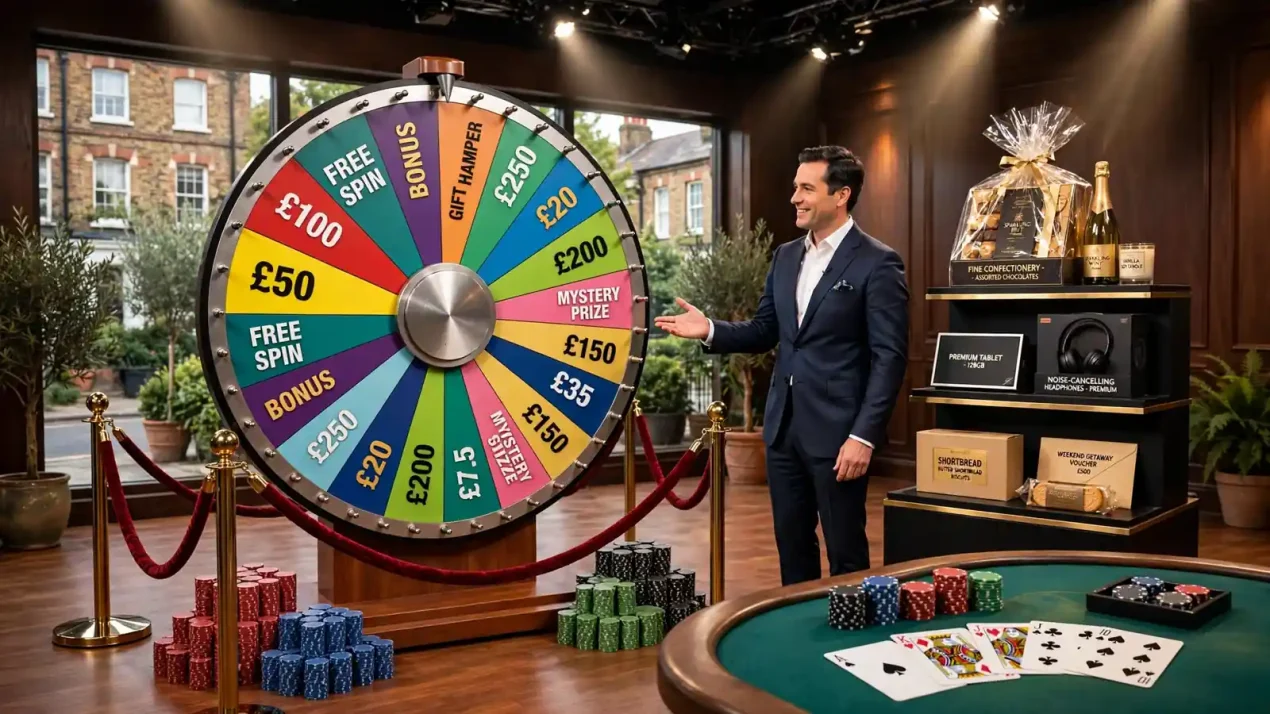
Crazy Time is described as a live casino game show, a label that places it at the intersection of casino gambling and entertainment presented in a show format. That description identifies the broad kind of product under discussion; it does not, by itself, establish how the game is played, what appears on screen or how any outcome is determined.
The phrase “live casino” can also carry more than one implication. It may refer to a product category, while “game show” suggests a presentation style. Neither phrase alone confirms the details of a particular game. In the case of Crazy Time, the name can therefore be used to identify the subject without treating assumptions about its mechanics or visual presentation as established facts.
Mines Casino Game UK: Rules, Free Play and Licensing
This distinction matters when considering descriptions of a Crazy Time casino game in the UK. A product label is not a complete account of the experience. It does not establish the rules, the sequence of play, the role of any host, or the way a player participates. Those are separate questions, and they should not be answered by reading details into the title. A concise description is more reliable than a vivid one that supplies unsupported particulars.
The same care applies to the year in the phrase “Crazy Time live casino game show UK 2026”. A year in a heading does not, on its own, establish that a particular version is available in the UK during that year. Nor does calling a product a live casino game show establish its UK availability. The wording describes a topic and a market, not a confirmed schedule or catalogue entry.
It is also useful to distinguish a general description from a claim about a specific operator. Saying that Crazy Time is discussed as a live casino game show does not establish that any named casino offers it. Likewise, the existence of live casino products at an operator would not, without product-specific confirmation, establish that Crazy Time is among them. These are separate claims and require separate support.
For readers trying to understand what the name denotes, the most defensible summary is deliberately narrow: Crazy Time is treated as a casino game show in a live-casino context. More detailed descriptions should be judged by whether they are supported by product information, rather than inferred from the words “live” or “game show”. This approach avoids conflating a category label with verified information about play.
Game Classification
Crazy Time is categorized as a live casino game show, but this label does not establish its specific rules or UK availability.
The phrase “live casino Crazy Time” may sound specific, but rearranging the words does not make the description more precise. The important distinction remains between identifying the product category and establishing its actual format. Without reliable details about that format, claims about particular stages, controls, outcomes or presentation should not be treated as confirmed.
Any real-money gambling carries the possibility of loss. Gambling should be limited to money that can be afforded to lose.
Our top casino picks for the UK
- NightLuckBonus: Welcome Pack + 805% Up To 6400€ + 280 FS · Payout speed: 1-3 business days
- BeOnBetBonus: 100% up to €500 + 100 FS · Payout speed: 1-3 business days
- DieselwinBonus: Welcome Pack 250% up to £4000 + 200 FS · Payout speed: 1-3 business days
- x3betBonus: Welcome Pack 100% Up to £1.000 + 200 Free Spins · Payout speed: 1-3 business days
- BritsinoBonus: Welcome Package – Get your £2,200 + 2,000 FS · Payout speed: 1-3 business days
- SpinFormulaBonus: 550% Up To £15,000 + 550 FS · Payout speed: 1-3 business days
- ChanzeBonus: Slots Welcome Bonus #1 200% up to €500 · Payout speed: 1-3 business days
- Revery PlayBonus: 100% up to€1,000+ 100 FS · Payout speed: 1-3 business days
Free Play, Gambling Limits and the Slot Classification Question
Interest in playing Crazy Time without staking money is distinct from interest in a free-spin promotion. Neither a free-play mode nor free spins can be confirmed for the game, so neither should be treated as an established feature. A casino’s general offer of free games would not, by itself, show that Crazy Time is included.
The relevant stake limits apply specifically to online slots in Great Britain. A specialist review reports a maximum of £5 per game cycle for customers aged 25 or older, and £2 for those aged 18 to 24. The same review distinguishes roulette and blackjack from slots for this purpose: it says those limits do not apply to either game. These figures should not be extended to other casino products without establishing how the product is classified.
Calling it a live casino game show does not settle the classification, and the limits for slots therefore cannot be attributed to it on that basis alone. Nor does the absence of a confirmed free mode establish that every version must involve real-money play; it means the availability of a no-cost option remains unverified.
Chicken Road Game in UK Casinos: What Is Known
A review of the game should consequently separate confirmed product information from assumptions about access or classification. Claims that Crazy Time offers free spins, or that a particular slot stake limit governs it, need support specific to the game and the operator providing it. In the absence of that support, those claims are not a reliable basis for assessing the product.
Any gambling should be limited to money that can be afforded to lose.
Bonuses, Deposits and Account Safeguards
Searches for a Crazy Time welcome offer, deposit bonus or no-deposit promotion do not establish that a particular casino provides one. Bonus terms belong to the operator, not to the game name, and can differ between sites. Without confirmed terms, claims about eligibility, wagering requirements, withdrawals or a Crazy Time-specific bonus would be speculative.
The same caution applies to searches about payouts. A casino’s payment and withdrawal conditions are operator-level matters; the game title alone cannot confirm how deposits or withdrawals are handled. Any advertised offer should be assessed against the casino’s own terms, including restrictions on eligible games and withdrawal conditions, before an account is funded.
For consumers in Great Britain, remote gambling operators must hold the relevant UK Gambling Commission licence. That status is distinct from a marketing claim that a casino is “not on GamStop”. The phrase does not establish whether an operator is licensed or whether it is suitable for British customers. A UK-licensed casino must provide self-exclusion arrangements, while an operator outside the UK regulatory system does not become authorised by using different wording in its promotions.
UK Account Safeguards
UK-licensed operators must prompt new customers to set a financial limit before their first deposit and provide an internal complaints process with access to an approved Alternative Dispute Resolution service.
Account controls also apply independently of any bonus. Operators must verify a customer’s age before permitting a deposit. New customers must be prompted to set a financial limit before their first deposit, with accessible controls for managing account limits thereafter. Credit cards cannot be used for gambling, including through a money-service business, and a wallet cannot be used where it permits credit-card funds to be spent on gambling.
UK-licensed operators must provide an internal complaints process and access to an approved Alternative Dispute Resolution service. These protections concern the account relationship; they do not validate a bonus claim or guarantee a particular payout timetable.
A promotion should therefore be treated as a separate contractual offer, not as evidence that a game is available or that a withdrawal will meet a particular expectation. Gambling carries financial risk: only gamble with money that can be afforded to lose.
Rules, Multipliers and What the Available Facts Do Not Specify
A game’s title or live-casino label does not establish its rules. Those details should not be inferred from the name, from general conventions in casino games or from descriptions of other live games.
The same caution applies to claims about possible scores or multiplier values. A reliable explanation would need to identify the relevant rules and show how they relate to the particular version being offered. The label “trusted” attached to a casino does not, on its own, verify the game’s rules or scoring.
Online slot limits are a separate regulatory subject. A specialist review reports a Great Britain limit of £5 per game cycle for adults aged 25 or older and £2 for those aged 18 to 24. That report concerns online slots; it does not establish that Crazy Time is classified as a slot or that those limits apply to it. The same specialist review distinguishes roulette and blackjack from slots for this purpose, but that distinction does not determine Crazy Time’s classification.
Live Dream Catcher Casino UK: Availability and Checks
Accordingly, slot limits should not be used as a substitute for game-specific rules. A casino’s published terms may identify how it describes a game, but a clear, current explanation of Crazy Time’s rules and any multipliers is needed before such details can be treated as established. Any wagering also carries a risk of loss, so only money that can be afforded to lose should be put at risk.
Demo Versions and the Difference from Free Play
A demo version and free play can describe related but distinct ways of accessing a game without staking real money. A demo generally refers to a non-cash mode of a particular title; free play may also describe a promotional or practice option. The labels alone do not establish how a mode works, whether it is provided by the game’s developer or a casino, or whether it is available in the UK.
For Crazy Time, the term “demo” should therefore be treated as a description of the access being sought, not as confirmation that a playable version exists. Calling it a slot demo does not establish that the game is classified as a slot. Nor does a live-casino setting, by itself, confirm a separate demonstration mode.
JetX Casino Game in the UK: Category and Rules
Any claim about a Crazy Time demo is more meaningful when it identifies the product and the conditions of access. In particular, a page should make clear whether it offers an interactive practice mode or merely describes the game, and whether access requires an account or other conditions. Without those details, “demo” may be a label rather than evidence of a usable mode.
This distinction also prevents demo and free-play claims from being treated as interchangeable. A free-play option would need to be described on its own terms; a demo would need to be identifiable as a functioning version of Crazy Time. Neither label should be taken as proof of the other, or as evidence that a particular UK casino provides it.
Are online casino games licensed and regulated?
Yes. The UK Gambling Commission regulates online gambling, and remote operators serving consumers in Great Britain must hold the relevant licence.
What are the online slot stake limits in Great Britain?
The limit is £5 per game cycle for adults aged 25 and over, and £2 for adults aged 18 to 24. These limits do not apply to roulette or blackjack.
Is LuckyPays licensed by the UK Gambling Commission?
The Commission’s public register does not list LuckyPays under that brand or its stated domain, luckypays.io. The operator’s identity and relevant licence should be checked against the register.
Related posts

Terms of Use
UK Gambling Casino Sites: Slots, Licensing and Terms