
Casinos That Accept Direct Banking: UK Payment Guide
 Available in GB
Contents
Direct banking can mean different payment services, so availability, account consistency and transaction conditions all matter.
Direct Banking in the UK Casino Payment Landscape
“Direct banking” is a broad label rather than a single payment product. In casino listings, it can refer to a payment route connected to a bank account, but the label alone does not establish which service is involved or how a particular transaction is handled. Open Banking is one term used in this area; it should not be treated as interchangeable with every bank transfer or bank-linked payment option.
That distinction matters when comparing online casinos that accept Open Banking. A payment heading may describe a general category, while the cashier presents a specific service with its own conditions. A casino’s use of language such as “banking” or “bank transfer” does not, by itself, confirm that the route uses Open Banking. Nor does a general mention of Open Banking establish that every customer, bank or transaction can use it.
The established card option provides a useful point of comparison. UK casinos commonly accept debit cards, including Visa and Mastercard. This makes debit cards a familiar part of the payment landscape, but it does not mean every card product is eligible at every site. Credit-card payments for gambling are prohibited at UK-licensed casinos; the regulator introduced the ban on 14 April 2020, and it remains in force. The distinction between debit and credit is therefore substantive, not merely a difference in branding.
Direct banking is best considered as another possible route alongside that established debit-card option, not as a claim that one method is universally available or preferable. The wording used by a casino may signal that a bank-linked method is offered, but the method’s precise identity and availability still matter. A general description is not enough to infer that the same payment route is supported across all UK-facing casinos.
This is relevant to the phrase “top casinos that accept direct banking” because a list based only on that label could conceal important differences. One site might use a named Open Banking service, while another might describe a bank transfer or a different account-linked arrangement. These are not necessarily the same product. Without clarity about the method itself, a ranking would risk comparing unlike options under one broad heading.
TRON TRX Casino Comparison for the UK
The same care applies to phrases such as “casinos with Open Banking UK” or “online casinos that accept Open Banking”. They describe an area of interest, but not a uniform set of payment terms. The category cannot establish whether a method appears in a particular casino’s cashier, whether it is available to a given customer, or whether it supports the transaction being considered. Those points must be assessed at the level of the individual operator and payment option.
A sound overview therefore separates three questions. First, what does the casino mean by direct banking: a named Open Banking service, a bank transfer, or another route? Second, is that specific method actually offered by the casino? Third, what are its conditions for the intended transaction? Treating these as separate matters avoids assuming that a broad label answers questions it does not address.
The distinction also prevents an unhelpful comparison with cards. Debit-card acceptance is a familiar feature of UK casino payment pages, with Visa and Mastercard among the named card networks. Direct banking, by contrast, is not a single card-like product that can be identified from the category name alone. The label needs interpretation before it can support a meaningful comparison. That does not make the category irrelevant; it means that its meaning should be established rather than presumed.
For a UK-focused assessment, the regulatory setting is also part of the landscape. Remote gambling licensees serving Great Britain must hold the relevant UK Gambling Commission licence. That requirement governs the operator, while payment labels describe how a casino presents its transaction options. Neither a banking term nor a familiar card logo substitutes for checking the operator’s status and the actual payment information shown by the casino.
Accordingly, “direct banking” is most useful as an initial description, not as a verdict on quality. It can help distinguish bank-connected routes from debit-card payments, but it does not by itself establish availability, suitability or a shared standard across casinos. The relevant comparison begins with the precise method being offered and the terms attached to it. This framing keeps Open Banking in view without treating every bank-related payment as Open Banking or presenting a supposed ranking where the category alone cannot justify one.
Credit Card Ban
Credit-card payments for gambling are prohibited at UK-licensed casinos; this regulatory ban has been in force since 14 April 2020.
Our top casino picks for the UK
- NightLuckBonus: Welcome Pack + 805% Up To 6400€ + 280 FS · Payout speed: 1-3 business days
- BeOnBetBonus: 100% up to €500 + 100 FS · Payout speed: 1-3 business days
- DieselwinBonus: Welcome Pack 250% up to £4000 + 200 FS · Payout speed: 1-3 business days
- x3betBonus: Welcome Pack 100% Up to £1.000 + 200 Free Spins · Payout speed: 1-3 business days
- BritsinoBonus: Welcome Package – Get your £2,200 + 2,000 FS · Payout speed: 1-3 business days
- SpinFormulaBonus: 550% Up To £15,000 + 550 FS · Payout speed: 1-3 business days
- ChanzeBonus: Slots Welcome Bonus #1 200% up to €500 · Payout speed: 1-3 business days
- Revery PlayBonus: 100% up to€1,000+ 100 FS · Payout speed: 1-3 business days
How Open Banking Fits Online Casino Payments
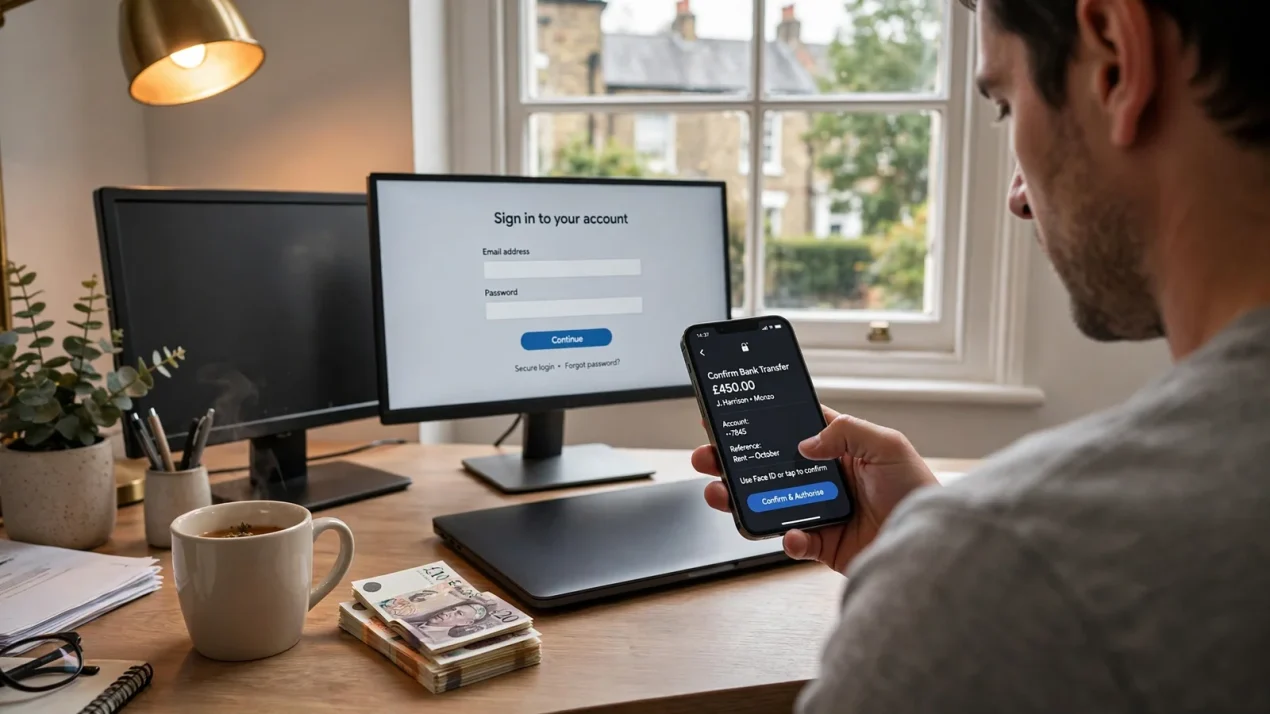
Open banking is a way for a casino payment to be initiated through a bank account rather than through a card or a separate stored-value wallet. In practice, the casino’s cashier presents a bank-payment option, and the transaction is authorised using the relevant banking service. The route links the payment to the customer’s bank, while the casino receives the transaction through a payment service. The exact steps depend on the service offered by the site.
This makes open banking relevant to online casino payments as an alternative to entering card details. It is not simply another name for every bank transfer: a bank transfer may involve a different process, even though both routes use funds held in a bank account. Casino payment menus can use different labels for these options, so the name shown in the cashier is not enough on its own to establish how a particular transaction will be handled.
A specialist casino review reports that open-banking services and bank transfers can support instant deposits and fast withdrawals at many sites. That is a description of reported capability, not a standard that applies to every casino or transaction. The payment route’s practical role is therefore best understood as a potential way to move funds between a bank account and a gambling account, with availability and performance dependent on the service in use.
For a deposit, open banking can offer a direct route from a bank account into a casino balance. This differs from a prepaid voucher, which is deposit-only, and from a card payment, which is processed through the card network. The distinction matters because a casino may list several methods that all appear to take money from a bank-related source but use different payment systems. The cashier’s description is the relevant starting point for identifying which route is actually offered.
The route may also be used for withdrawals where the casino supports it. A reference to fast withdrawals does not mean that every payout reaches a bank account immediately. Casino processing and the payment service are separate parts of the transaction, and the existence of an open-banking option does not itself establish the time a particular payout will take. Deposit speed and payout speed should not be treated as interchangeable features.
Casinos that accept Dogecoin in the UK: what to check
Open banking also occupies a different place from e-wallets. PayPal, Skrill and Neteller are separate payment services, while open banking connects a payment to a bank-account route. Some casino sites may offer several of these categories in the same cashier, but their presence does not make them equivalent. Their deposit and withdrawal functions, as well as any promotion conditions, need to be assessed from the terms attached to each option rather than inferred from the category name.
The practical appeal of open banking is the possibility of paying without relying on a card transaction or maintaining a separate wallet balance. Whether that is useful depends on the payment services a casino makes available and whether the method is shown for the relevant transaction. A general statement that a site accepts bank payments does not necessarily confirm that it supports an open-banking service, or that the same route is available for both deposits and withdrawals.
In the UK, searches for casinos that accept open banking often reflect an interest in this bank-linked route rather than a request for a particular provider. The label alone does not indicate which service processes a payment or how it will function at a specific casino. A cashier may display a named open-banking option, a bank-transfer option, or both. Those labels should not be treated as interchangeable without checking the payment description provided by the operator.
Open banking is thus a payment channel, not a guarantee of a particular transaction outcome. It can provide a practical way to initiate casino payments from a bank account, and specialist casino coverage reports that some sites support rapid deposits and withdrawals through open banking or bank transfers. The reported capability should not be read as a promise for every operator. Its relevance lies in the route it provides; the precise function depends on what the casino’s cashier supports.
Casinos That Accept Litecoin in the UK
Keeping the Bank Account and Payment Route Consistent
For an Open Banking casino in the UK, the key consistency issue is whether the bank account information and the payment route are associated with the same customer. The names and ownership details behind a casino account and its banking route are part of the transaction context, not incidental information. When they point to the same person, there is less scope for basic ownership questions to interrupt a payment.
This principle concerns identity, rather than the technical operation of Open Banking. A payment can be initiated through a banking route, but the account used for that route still has an owner. If the casino account is held in one person’s name while the connected bank account belongs to somebody else, the relationship between the two may be unclear. Keeping the account and route under the same customer’s ownership reduces the chance that this simple mismatch creates avoidable friction.
Consistency is also distinct from using one particular bank or payment brand. The relevant point is the connection between the customer and the account information used for the transaction. An Open Banking casino site may present a payment route as a bank-based option, but that label alone does not establish whose account is being used. Ownership remains a separate consideration.
This distinction matters when comparing the wording on a casino account with the details attached to a bank account. A customer’s identity should be represented consistently across the two. Differences in names or account ownership can make the relationship less straightforward, even where the person initiating the transaction believes the funds are available to them. The purpose of consistency is to keep the basic account-holder relationship clear, not to imply that every difference will automatically cause a payment to fail.
The same principle applies where another person’s banking details are used with permission. Permission to access or use an account does not, by itself, make its owner the same person as the casino account holder. From an ownership perspective, the distinction remains: the payment route is tied to the person whose bank account it is. Avoiding a mismatch therefore means considering account ownership, not merely who has access to a device or who presses the payment button.
Do
- Ensure the casino account is in your name
- Use a bank account belonging to the same customer
- Maintain consistency between account and route ownership
Don’t
- Use a bank account held by another person
- Assume permission to use an account equals ownership
- Mix account-holder identities to avoid transaction friction
A consistent route can make the transaction context easier to understand. Where the casino account and bank account belong to the same customer, the basic details do not point to different people. This reduces one avoidable source of friction, although it does not guarantee that every transaction will proceed without questions. Payment arrangements may involve other checks, and consistency of ownership should not be treated as a substitute for meeting an operator’s requirements.
It is useful to distinguish between continuity and ownership. Using the same named account for transactions can make the relationship between the customer and the payment route more legible. Switching between accounts belonging to different people does not preserve that clarity simply because each account can be accessed by the customer. The relevant connection is not only that a route is available, but that it belongs to the same customer whose casino account is involved.
For an online casino using Open Banking, this makes account-holder consistency a practical feature to assess before a transaction. The central question is whether the banking details and the casino account identify the same customer. Where they do, basic ownership details are less likely to create avoidable friction. That is a limited but meaningful point: it describes the clarity of the relationship between accounts, without making a broader claim about payment speed or the treatment of every individual transaction.
Instant Deposits and the Difference Between Deposit and Payout Speed
“Instant” describes a particular part of a transaction, not the whole movement of money in both directions. A deposit may appear in a casino balance quickly, while a withdrawal follows a separate process before funds reach a bank account. Treating the two as a single measure of payment speed can therefore give a misleading impression.
Casinos That Accept Wirecard in the UK
Specialist reviews have described open banking and bank transfers as capable of supporting instant deposits and fast withdrawals at many sites. That wording is not a guarantee for every casino or transaction: it describes a reported possibility, and the result can depend on the service and circumstances involved. A claim that a casino accepting direct banking offers instant deposits should be read narrowly unless its terms explain what “instant” means.
For a deposit, the relevant question is when the casino balance updates and becomes available for use. A payment authorisation or confirmation may occur before that point, so the term alone does not establish exactly when the funds will show in the account. Nor does a quick balance update establish how quickly a later withdrawal will be delivered. Those are separate stages and should be assessed separately.
A specialist review has also reported that a card deposit can be instant even when the related payout takes several business days. This illustrates the distinction without establishing a standard timetable for every operator or payment route. Speed in one direction does not prove equivalent speed in the other: a casino can process incoming and outgoing transactions differently.
The same caution applies to broad descriptions of an Open Banking casino as “fast”. Such a label may refer to deposits, withdrawals, or both, but without a clear definition it is not a precise service commitment. A stated instant deposit time should not be interpreted as a promise that a withdrawal will arrive just as quickly. Where a casino publishes separate estimates for deposits and payouts, those should be considered independently.
Deposit speed and payout speed are separate processes; an instant deposit does not guarantee that a withdrawal will arrive just as quickly.
A no-deposit bonus is also distinct from payment speed. The phrase concerns a promotion rather than the time taken for a bank transaction. It does not, by itself, show that a casino accepts open banking, that an instant deposit is available, or that a particular payment route qualifies for a promotion. Deposit speed and promotional eligibility are separate questions.
Bank transfers can be affected by cut-off times, weekends and currency conversion, according to specialist reviews. Those factors can make the route from a confirmed transaction to funds appearing in an account less straightforward than the word “instant” suggests. The details of a particular payment service matter more than a general label, and a published description should be checked against the cashier and the casino’s payment terms.
For timing comparisons, the useful distinction is between the moment a deposit is credited and the point at which a withdrawal reaches its destination. An advertised instant deposit concerns the former. It should not be treated as evidence of a matching payout speed or as a reliable estimate for every transaction.
Comparing Direct-Banking Options Without a Casino Ranking
A useful comparison of direct-banking options is not a league table of casino brands. Payment arrangements and account conditions can differ, and a label such as “Open Banking” does not establish that every site applies the same rules. A sound assessment therefore separates the payment route from the operator’s terms and avoids treating speed claims or promotional language as evidence of overall suitability.
Casinos That Accept Bitcoin in the UK: What’s Verified
One practical point concerns deposit ceilings. A specialist casino comparison review reports that maximum deposits can be set per transaction, per day or per month, and that the applicable amount may depend on both the payment method and the account’s status. These limits are not necessarily uniform across a site’s available methods. A comparison should therefore record which method a stated ceiling applies to, the period it covers and whether the condition is tied to the account. Without those distinctions, figures from different offers cannot be compared reliably.
The payment method should also be assessed by its role in the transaction rather than by its name alone. Direct bank connections, bank transfers and card payments are not interchangeable labels, even when they are presented as ways to fund a casino account. The relevant comparison is the set of conditions attached to each route: what the operator says it supports, whether the stated deposit rules vary by method, and whether the account is subject to additional status-dependent conditions. Claims that a route is “instant” or “fast” should not substitute for clear terms.
Payment Route
Specify the precise method being described rather than using a general label.
Deposit Ceilings
Record the maximum per transaction and any daily or monthly limits, noting if they depend on account status.
Regulatory Status
Verify the operator’s UK Gambling Commission licence number via the public register.
For people comparing Open Banking casino sites, the operator’s published information is more useful when it specifies the method and its conditions than when it relies on broad descriptions. A newly launched site is not automatically a better option than an established one, and the word “new” says nothing by itself about deposit terms, account controls or regulatory standing. Likewise, a list presented as the best Open Banking casinos cannot establish a meaningful ranking unless its criteria are explicit and supported.
Safety requires a separate check from payment convenience. In Great Britain, remote gambling licensees serving customers must hold the relevant UK Gambling Commission licence. The licence number can be checked against the Commission’s public register before depositing. This verifies regulatory status; it does not establish that a particular payment method will suit every account or that every transaction will receive identical treatment.
A comparison can be kept focused with a short record for each option:
- the payment route being described, rather than a general label;
- the stated maximum per transaction and any daily or monthly ceiling;
- whether the stated limits depend on account status;
- the source and date of any claim about speed or availability; and
- the operator’s UK regulatory status.
This framework is more informative than naming supposed winners. It allows a direct-banking deposit option to be evaluated on disclosed conditions without assuming that one method, casino or account profile is universally preferable. It also helps distinguish a claim about a payment route from a condition that applies to the customer’s account. Where a comparison omits the method-specific or account-specific context for a limit, its figures should not be treated as directly comparable.
UK Direct Banking, Deposit Limits and Account Controls
Direct banking changes how money reaches a casino account; it does not remove the financial controls that apply to deposits. In Great Britain, UK Gambling Commission rules require remote gambling licensees to prompt new customers to set a financial limit before their first deposit. They must also make account-level limit controls accessible.
The timing matters. The prompt is required before the first deposit, rather than being an optional tool presented only after account activity has begun. A direct-banking payment route does not create an exception: the requirement concerns the gambling account, not a particular card, bank transfer or open-banking service.
A limit is a control chosen in the context of the account. Its value should therefore be considered separately from the amount a payment method can technically process. A bank may authorise a transaction, but that does not establish what is appropriate for a customer’s gambling budget. Likewise, the availability of an account-level control does not mean a payment route itself sets or manages the limit.
For a casino with direct banking in the UK, the relevant check is whether the account process includes the required pre-deposit prompt and whether limit controls remain accessible afterwards. A control that is difficult to locate would not serve the same practical purpose as one that can be reached through account settings. The stated requirement is access to controls; specific procedures for changing a limit should be checked in the operator’s own account information rather than assumed to be identical across sites.
Diners Club at UK Casinos: Acceptance and Deposits
This distinction is useful when comparing direct-banking casino sites in the UK. Payment method and account controls answer different questions: one concerns the route used for a transaction, while the other concerns financial boundaries on gambling activity. A site’s acceptance of bank payments, by itself, says nothing about how clearly its limit-setting process is presented.
These controls are part of the regulated account framework, not a feature exclusive to direct banking. Their presence should not be treated as a guarantee that gambling will remain affordable or that a chosen limit is suitable. The regulatory requirement establishes that customers must be prompted to set a financial limit before depositing and given accessible account-level controls; it does not determine an individual’s budget.
Checking Payment Method Availability and Currency Support
A payment method named on a casino’s general information page is not necessarily available for every account or transaction. The cashier is the practical check: it shows which routes can be selected for the account and, where displayed, whether they are offered for deposits, withdrawals or both. Availability can differ between sites and may change, so a method should not be treated as usable solely because it appears in a review or an older payment guide.
Specialist casino reviews list Visa and Mastercard among the methods offered by some sites, but that does not establish current UK availability or eligibility for every card product. Those details need to be confirmed in the relevant cashier. UK-licensed casinos cannot accept credit-card payments for gambling, including credit-card funding routed through a money service business. A card’s brand therefore does not, by itself, establish that it is eligible: the product type and the operator’s payment rules also matter.
The same check applies to an Open Banking casino payment method. A site may describe a bank-based route in general terms, while the cashier determines whether it is available for the particular account. The term “instant banking” should not be taken as evidence that a route is offered, or that it supports every transaction type. Availability for deposits and availability for withdrawals are separate questions; each should be checked rather than inferred from the method’s name.
Casinos That Accept E-Checks in the UK: Evidence
Currency is another part of whether a route is usable. Specialist reviews of casino sites report GBP support, but that does not confirm the currency configured for every account. The account currency should be checked before the first transaction. If it differs from the currency used by the bank or payment route, conversion may occur, making the amount debited or credited differ from the amount displayed in the casino account.
These checks establish whether a method can be used without assuming that a listed brand or payment label guarantees compatibility. The cashier and the account’s currency settings provide the relevant details for the transaction in question.
Deposit Costs, Fees and Minimum Amounts
The cost of a direct-banking casino deposit cannot be judged from the cashier’s displayed fee alone. A specialist casino review identifies several possible charges: a fee imposed by the casino, a payment-provider charge, a fee from the bank or card issuer, an exchange-rate spread, and, where relevant, a network fee. Which of these applies depends on the route and transaction, so a payment method described as free by one party may still carry a cost elsewhere in the process.
Currency conversion deserves separate attention. If the casino account and the funding account use different currencies, the exchange rate applied to the transaction may include a spread rather than a separately labelled charge. A specialist casino review notes that this spread can exceed a visible flat fee. The comparison therefore needs to consider the total amount deducted, not just a fee shown beside the deposit option. Where the account is held in pounds and the transaction is also processed in pounds, that particular conversion cost may not arise; other fees can still depend on the provider or bank.
The same specialist-review evidence places the minimum deposit commonly offered in the £10–£20 range, with the threshold varying by payment method. This is an entry requirement for a transaction, not the same as an account-level deposit limit. A low minimum does not establish that a route is inexpensive, while a higher minimum does not by itself indicate a fee. Both figures and charges should be read from the relevant cashier and payment terms, since they may differ between methods and sites.
Attention A payment method described as free by one party may still incur charges from the bank, payment provider, or through exchange-rate spreads.
For a practical comparison, the relevant calculation is the deposit amount less any casino, provider, issuer, bank, conversion or network costs that apply. No single route can be identified as the cheapest across all casino sites and transactions: the result depends on the actual charges and exchange rate for the chosen payment. A direct banking label alone does not establish that the deposit is fee-free.
Withdrawals: Source-of-Funds Rules and Processing Time
A direct banking casino withdrawal is not necessarily sent to a different account simply because another route appears available in the cashier. UK anti-money laundering rules generally require a casino payout to return to the original payment source. This is a closed-loop control: the route used to receive a withdrawal is linked to the one through which the funds entered the casino.
That requirement can affect expectations of a fast withdrawal from an Open Banking casino. A payment method’s advertised speed does not determine the complete time to payout. The casino must first process and approve the withdrawal, and the subsequent transfer follows the rules and handling of the original source. A request described as instant banking withdrawal may therefore refer to a particular stage or service, rather than a guaranteed arrival time for every customer.
A specialist casino review notes that withdrawal processing can take longer when a first payout requires verification. That distinction matters because processing time includes the casino’s internal approval, not just the movement of funds after approval. If checks remain outstanding, the request may not be released promptly even when the payment route itself supports rapid transfers.
First-withdrawal verification is relevant to the payout process, rather than evidence that every later withdrawal will follow the same timetable. Account status and any remaining checks can affect when a casino approves a request. No single processing estimate can therefore be applied to all direct banking casino withdrawals.
Casinos That Accept Boku in the UK: What to Know
Where a payout cannot be returned through the original source, an alternative route may be subject to the casino’s procedures and additional checks. The applicable payment terms should clarify how the casino handles that case, including whether another method is permitted. The central point is that withdrawal speed depends on both internal approval and the conditions attached to the original payment source; the term “fast” alone does not establish when funds will arrive.
Payment Security and Avoiding Preventable Transaction Friction
Returning a casino payout to the payment source used for a deposit is a common anti-fraud and anti-money-laundering control. It helps establish that funds are moving between the gambling account and a source connected to the same customer, rather than being redirected to an unrelated account. This is a security measure, not simply an administrative preference.
Closed-loop rules can therefore affect how a payment route is used. Where a casino requires the original source to receive a payout, changing to another method may not be straightforward. An alternative route can involve additional verification before funds are released. That does not necessarily indicate a problem with the account; it can reflect the operator’s need to confirm ownership and the legitimacy of the transaction.
Using one named account consistently for deposits and withdrawals is often the clearest arrangement. The name on the casino account and the details associated with the banking route should correspond to the same customer. A mismatch can create avoidable questions, particularly when a payment is reviewed. Direct banking does not remove the need for these checks: the route still has to be attributable to the account holder.
These ownership controls also explain why payment convenience should not be assessed in isolation. A method may be suitable for making a deposit but less practical if it cannot receive a payout or if switching sources triggers further checks. Before using a casino that accepts instant banking, the relevant terms should make clear how the payment source is treated for withdrawals. The essential point is consistency: a recognisable route tied to the same named account can reduce preventable friction without bypassing the casino’s security procedures.
What is the fastest withdrawal method for UK casinos?
PayPal, Open Banking services and debit cards linked to fast payout systems are generally among the quickest options. The casino’s approval process and your verification status also affect how long a withdrawal takes.
Which payment methods are accepted in Great Britain?
UK casino payment options commonly include Visa and Mastercard debit cards, bank transfers and e-wallets. PayPal, Skrill and Neteller are available at some sites; check the casino’s cashier for its current options.
Is Skrill available?
Yes, Skrill is one of the common deposit options at UK-friendly casino sites, though it is not offered everywhere and may be excluded from promotions.
Related posts

Terms of Use
UK Gambling Casino Sites: Slots, Licensing and Terms